Feature

An Oral History Of Fallout, Part III: Leaping To Live-Service And Going To Hollywood
Bethesda learns to stick with a game that initially fell flat, while Hollywood adapts the series' source material to great success
INTRODUCTION
Fresh off the popularity of Fallout 4, Bethesda decided the next step for the Fallout franchise was to create a live-service game titled Fallout 76. This brought with it a whole host of challenges, which led to the first major stumbling block during Bethesda's time with the franchise. Meanwhile, Bethesda's Todd Howard began preliminary discussions with Hollywood writer, producer, and showrunner Jonathan Nolan to adapt Fallout as a live-action streaming series.
The Oral History Of Fallout Guide
The Creation of Fallout
Part I
Fallout Goes Live-Service and Hollywood
Part III
More Fallout Coverage
SERIES HUB
Fallout 76
FALLOUT 76
“Sometimes you’ll strike out. But you don’t stop playing.”
JONATHAN RUSH
Creative director of Fallout 76
I remember the first day when I heard that we were going to be working on a multiplayer Fallout; my head just exploded because I’d spent my whole Christmas break playing Fallout 4, and it would always be with one of our current devs. We’d be on the phone, “Oh, you should see what I have! You should see what I built! You should see what I did!” And in the back of my mind, I’m thinking, “Man, I wish I could play this with him.” And then, hearing that we’re going to start making a multiplayer Fallout, I’m like, “Yes, I’m in! Let’s go!”
EMIL PAGLIARULO
Lead designer of Fallout 3 and Fallout 4, writer of Fallout Shelter, design director of Fallout 76
It all starts with our comfort level with the franchise. When we did Fallout 3, a lot of Fallout 3 is transitional from the old Fallout stuff to the new Fallout stuff. When we get to Fallout 4, a lot of it is new, so we feel more comfortable with our ownership of the franchise and what we’re doing. When it came time to do 76, there were two things we knew: One, it’s going to be a prequel, so we feel comfortable saying what happened in the early years, but the other thing is, you know, a multiplayer game. Bethesda had been known for single-player RPGs, right?
RUSH
We always wanted to hang on to those core tenants. It’s that same feeling that players have when they’re going through 3 and 4 and they have that kind of single-player, Lone Wanderer sort of experience. It’s not that we wanted to turn it into a massively multiplayer game where I’m seeing 1,000 people running around the server. We wanted to keep it a bit more intimate… like a small number of players on the server.
What the initial inception was, any other human characters that you saw, those were real players. It was to try and foster some of those real interpersonal connections you make with people, while at the same time, not leaving out characters that used to live in this region, which you learn about things they left behind, or places they used to live, or even their bodies.
There was an identity. There was a character you were coming to terms with in Appalachia, and then there were all the newcomers – the Vault Dwellers – that you would run across. That was the initial inception, and honestly, I think that made for a very, very ingenious and eloquent way to introduce this game and the idea of this to our Fallout fan base, to introduce this new region, to introduce the idea that you’re playing with other people, rather than hitting them over the head with it like, “Here’s 1,000 people you get to…” It was just, “Here’s some neighbors that you can adventure with.”
PAGLIARULO
Originally as conceived on paper, Fallout 76 was going to be a pretty small game. We had talked about a lot of different things, but it was a lot smaller at first on paper – maybe it’ll be more like Rust or a survival game – maybe it’ll be PC only. And then it just became bigger and bigger, and we realized the potential of it, and we started getting better with the multiplayer. Our single-player designers had to learn to become multiplayer designers.
RUSH
One of the things that makes Bethesda Game Studios so unique from other studios, everybody that works here on these games loves playing these games. So, if the initial conception, stepping back and thinking, “Oh, players might not like it,” I wouldn’t say it wasn’t thought about, but we were more focused on, like, as players of these games ourselves, what would we want to see? How would we want to play this?
Bringing the multiplayer aspect in, I think a lot of us recognized what I recognized from 4: These would be fun experiences to share with a friend, with a neighbor, with somebody I don’t know, future friends… I think that’s what fostered that initial ideation, not so much wondering or worrying about what people would think. I think those kinds of things are always at the back of our mind, but not letting those worries dictate what gets made.
Bethesda revealed Fallout 76 on June 10, 2018, during its E3 2018 press conference. The announcement that the next Fallout game would be a multiplayer title was considered controversial and sparked negative reactions from many long-time fans. During that same press conference, Bethesda aired a reveal trailer for The Elder Scrolls VI.
RUSH
In some ways, players reacting to this now being a multiplayer experience was kind of understandable because they’ve never played a Fallout mainline game that had that multiplayer experience before. Something new, I think, might have been kind of raising questions, and those questions were expressed with frustrations.
PAGLIARULO
We’ve seen developers who, you know, there are negative comments online and they freak out and try to change things. The internet is a lot of things, but it is not patient, right? There’s this immediate gratification that gamers want, and they don’t understand game development or how hard it is to do things and how long it takes. But we, as developers, we know that. And so, you have to say, like, we would rather swing big all the time. And when you swing big all the time, sometimes you’re going to get a strike, right? Sometimes you’ll strike out. But you don’t stop playing; you keep going and you readjust.
BILL LACOSTE
Production director of Fallout 76
We’re players of these types of games. We love Fallout, and as we’re building it, we’re finding the fun. We’re seeing the fun. We’re doing playtests and going, “This is going to be really cool.” It’s something new, and so there’s always going to be that issue of, like, “Oh, that’s definitely not something you guys have done before. I don’t know how I feel about this.” And honestly, even with every update ever since then, there’s always going to be people who are like, “I don’t know how I feel about that.”
Fallout 76 launched on November 14, 2018, to Metacritic averages that range from 49 to 53, depending on platform, including a 6 from Game Informer. In 2019, Howard told IGN that he regretted not having a public beta test, and called a lot of the criticism the game had received, “very well-deserved.” According to NPD Group, Fallout 76 sold fewer units than Fallout 4 or Fallout: New Vegas.
PAGLIARULO
At the beginning, we wanted it all to be player-driven, so there weren’t NPCs, but you know what? That’s the beauty of a live-service game: You have a community and that community has needs and desires and they’re very vocal about those needs and desires. So, for the first time ever, we were really reacting to our fan base as quickly as we possibly could to give them the game that wasn’t just about our vision of the game, but what’s their vision of the game?
RUSH
Once players got in and they got to feel what it was like, it wasn’t so much, “Oh, I have to play with other players,” it was, “Where is everybody?” because it was all robots and carcasses and things left behind. What they got to experience was really the prelude to the first chapter of the story, the first chapter of the story really being where everybody comes back to this region and we get Wastelanders.
But they were still experiencing that prelude with other players, and I think to them, it was just something new. And maybe some weren’t sure how to react to it, or what they would think once they hopped in, so a lot of those comments, I don’t think, were a big surprise. But the team here felt very confident and invested in what we were doing and very assured that we were making the right decisions.
TODD HOWARD
Game director of Fallout 3 and Fallout 4; executive producer of Fallout Shelter, Fallout 76, and Fallout on Amazon Prime Video
The game obviously didn’t launch in a great state, but it had an audience, even then, that was like, “No, no, we really love this. Stick with it,” and that allowed us to stick with it. We had moments where you saw the quality of the game and what it could do, these big jumps, but also a lot of small jumps every quarter for six or seven years now. But it all starts with the community believing that this type of game would not just be Fallout, but be a special Fallout.
PAGLIARULO
I play a lot of games, and nothing bores me more than a game that’s like a clone of another game. It’s like playing the same thing over and over; you change the setting, you change this, it’s still the same thing. And we want to do something different. And we tried to do 76 without NPCs, and have it be player-driven – that was a conscious decision to try and make something different. It’s hard when you’re the first one trying to do something. You never know what the reaction is going to be. Horse Armor [in The Elder Scrolls IV: Oblivion] was like the first DLC! We didn’t know what that was going to be like, but it didn’t stop us from trying!
You have to try, right? You have to, and when it doesn’t land, you can’t freak out. You just have to take stock of the other criticism, get through the bile, and really take the criticism to heart. And that’s what we did with 76, and then we readjusted to give the fans what they wanted. It’s a combination of letting it be driven by the fans and their desires, but also us not afraid to do something different and something that’s challenging for us.
RUSH
We get players telling us what they like, what they don’t like, but we know they’re invested in the games, they’re playing them, and what they say, they mean. With 76 being a new type of Fallout experience, it brought in players that maybe hadn’t played Fallout before, or brought it different types of Fallout players. A big part of that experience was getting to know who these players were, getting to know what they want, how they want to play.
And we listen to all that feedback, we read it, we watch it, we take it all in, and we try to really absorb, not necessarily the small, little details, but the bigger strokes. Like, “Hey, we want human NPCs back in the game.” Okay. “Hey, I need something else to do other than fight the Scorchbeast Queen! We need in-game experiences.” Okay, here’s a raid. The first part of it was us trying to understand who these players were and how we fit amongst them in the Fallout universe. That should shape 76 for years to come.
PAGLIARULO
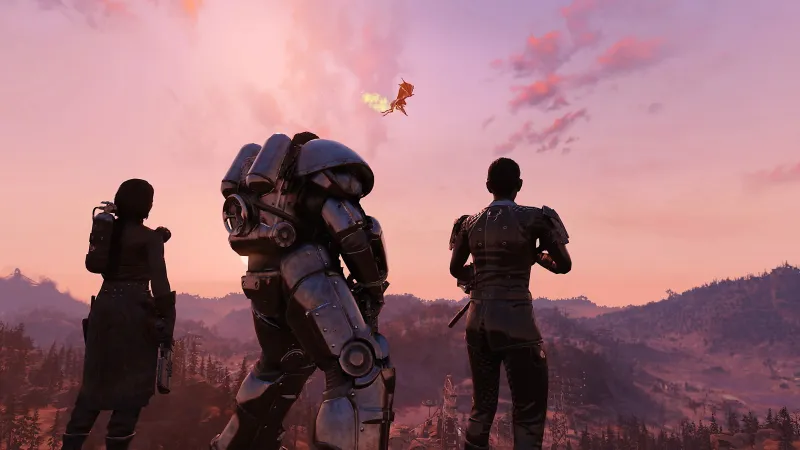
We added the big expansion that added NPCs, and now there’s a Bounty Hunter system, and we brought in The Ghoul from the show. A lot of where Fallout 76 has landed, it is the ultimate post-apocalyptic community. It’s this community sim where most people in that game are very friendly. They love building their camps. They love teaming up to take down big bosses. They love the different aesthetics that they have. 76 has been really fascinating for us to see. It’s a totally different type of Fallout experience. It’s a community Fallout experience.
BROWDER
We learned how to make multiplayer. We also learned what it means when you ship a product that doesn’t necessarily hit really well right away. And we learned about investing and listening to our players and strengthening who we are and what we are, our ability for resiliency and adversity, all these kinds of things.
RUSH
I think what gives developers a lot of satisfaction lies in that this is a live-service game that we update on a very regular cadence, and we get that feedback, whether it’s positive or negative or a mix, regularly. And so, that lets us know what’s working and what’s not working. Like, “Wow, that thing I put in was cool! I always thought it was, and now all these other people are saying it is!” Or, the opposite of that sometimes, and then we fix them. Ultimately, I think it’s that community reception that we get in kind of a relative real-time with how quickly we come out with these updates that reinforces that, “Hey, we’re making good decisions here.”
LACOSTE
We’re not afraid to really analyze whether a feature is actually hitting all the notes that we expected it to hit. If players are not engaging with it, we try to understand exactly why they’re not engaging with it. Sometimes, it really is rewards. Some, it’s like, “Well, the time-to-reward here is not as good as some of the other stuff. It’s a fun quest, or it’s a fun mission, or fun event, but we don’t want to do it.” And so, what we’ll do is go back and then try to figure out ways to drop more of those rewards in so that it is on par with some of the other events, and then all of a sudden, we see engagement come up.
And then, there’s also times where we just have to analyze, is it worth putting in the time and the effort to overhaul this whole system here, or do we just kind of let it go and say, “Hey, we’re turning that off. We’re moving forward. We’re going to create more stuff in the future that’s actually better with that lesson learned in the past”? And we’ve done that before, and I think that serves the players well, too, because it means we’re not leaving things in that may also get in the way of their gameplay or their fun.
RUSH
Trust me, there’s been a lot of learnings going on here over the years, but we look for ways that our players can continue telling their own stories.
LACOSTE
When we released public teams, it seems like it’s very innocuous, like it’s a very small, little thing. We’re like, “Oh, cool. You just want people to group up together.” Well, at the time, we saw 7 percent of the server actually getting into a group. And so, when we dropped that into the game and allowed people to have bonuses applied, so they would be getting XP bonuses along the way, we saw that jump up to 77 percent all of a sudden. Now, you go into a server, and everybody’s usually in a public team of some sort, because there’s a reason to be in there.
RUSH
Or, even a feature that’s much more widely engaged in: our building feature. Our world is full of people that love to build, build, build. So, when we came out with the Workshop improvements, U.I. improvements a little earlier [in 2025], as well as the lifted build rules, it was met with tremendous enthusiasm.
LACOSTE
We always listen to the feedback that comes in, whether it’s on Discord, whether it’s on Reddit… we do live triages every week. We’re always ingesting stuff that’s coming back from the live players. […] We take that stuff, we ingest it, and we try to find ways to continue improving all those underlying technologies.
HOWARD
Let me tell you, I couldn’t be more proud of the team and everybody on it. We started development of Fallout 76 in late 2014, and then in ’15 when Fallout 4 comes out, more so. So, we’ve been developing, nonstop, 10 years. And that takes a certain discipline to do that for that long.
BROWDER
When we think about Fallout 76 and this concept of doing a multiplayer game, we are better developers for having made a multiplayer game, and we are better developers for having developed our own IP, because it’s new muscles. It tested us in a different way. It taught us a lot of things that we never could know otherwise. I do think, even as we go into titles that are IP we’ve made before that we classically understand, we’re still better developers for having done it, because your brain thinks differently once you’ve done those kinds of things. And I think it’s only going to make every title we do better.
HOWARD
We want each of them to feel different. My favorite thing about the Fallout franchise now is the online debates about your favorite. It should be a debate! “Well, I like Fallout 1.” “Nope. Fallout 2!” Fallout 3, 4, New Vegas, 76… not a whole lot of people vote for Shelter! [laughs] We get it. That’s fine, even though it’s the most-played Fallout by a mile.
But we want them all to be different. I think it’s great that you can, if you’re a fan, return to each one in some way, and they have something unique to say.
In 2021, Howard participated in a Reddit AMA, where he stated that, since its 2018 launch, Fallout 76 had attracted 11 million players, making it one of Bethesda’s most played games. From 2019 to 2025, Bethesda released 25 major content updates for Fallout 76.
In that time, Bethesda Game Studios, led by Howard, Pagliarulo, Browder, and others, began work on Starfield, a new science-fiction IP. In 2022, Howard told IGN that the development on the next Fallout game will begin following development on The Elder Scrolls VI.
BROWDER
I never felt like [creating another science-fiction IP would compete with Fallout]. Any hesitation was never around what we were doing. I think the only hesitation that I ever really experienced and felt myself, to be honest, was just, “Okay, we’re making a new IP.” I have been blessed to work here for a whole lot of years, but I’ve never made a new IP before. These are new muscles for me, even though I’ve shipped, you know, Skyrim and Fallout 4. But I’ve never made a new IP.
And so, I think that it was around that idea of, “Okay, this is a different set of muscles for us that we need to put some structure behind. We need to make sure we’re covering all the bases that we need to.
Starfield launched on September 6, 2023, receiving a Metacritic average of 83 and 85 on Xbox Series X/S and PC, respectively, including an 8.5 from Game Informer.
Fallout on Prime Video
FALLOUT ON PRIME VIDEO
“I understand the theology this is to people”
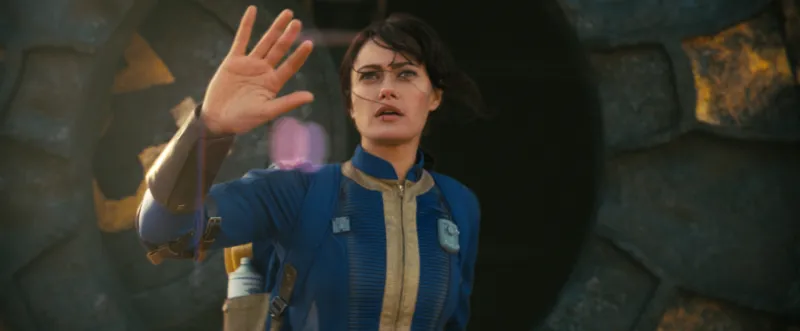
In 2020, Bethesda and Amazon Studios officially announced a live-action Fallout show for Amazon’s Prime Video streaming service. The announcement included news that Westworld co-creators Jonathan Nolan and Lisa Joy were developing the series. In January 2022, Geneva Robertson-Dworet and Graham Wagner were hired as showrunners. Shortly after that announcement, Walton Goggins, Ella Purnell, and Aaron Moten joined the cast as the three leads.
JONATHAN NOLAN
Executive producer and director of Fallout
It started with one of those great encounters: Todd Howard had asked to sit down with us – I had wanted to sit down with Todd for years – and we just had a great initial meeting. I had been a huge fan of the games; Fallout 3 is where it kind of started for me. And we walked away from that first meeting with a handshake deal that we make a TV series together.
HOWARD
I count the folks at Kilter [Films] as some of my good friends. Jonah Nolan is just, I don’t think there’s anybody I would work with as it comes to TV and movies now. That was one where a lot of people asked over a 10-year period… like, right after Fallout 3, like 2009, there was a push to like, “Hey, this would make a great movie!” And I never felt anything was the right fit. But, you’re anxious, like, “Okay, what if it’s bad?” And so, it was, “We’ll just wait and see if we find the right partner or something really feels right.”
As soon as I met Jonah and we talked about it, it was very clear, like, “Okay, if we’re going to do this, this is the guy,” and his team was just fantastic. It’s kind of stacking the deck in your favor. So, we were very involved up front, but also gave them, you know, “Here are the guardrails. We want you to tell a new story. Don’t retell a story. Tell a unique story that feels like the same way we’d approach a new entry in the game.”
NOLAN
One of the most fun aspects of Fallout for me is that every game is essentially a new story, a new chapter of this larger story that you’re telling. And so, for an adaptation, to have that incredible combination of here’s this beautiful world that’s almost fully realized, but there’s an opportunity working with Geneva and Graham to tell an original story.
GENEVA ROBERTSON-DWORET
Showrunner and writer of Fallout
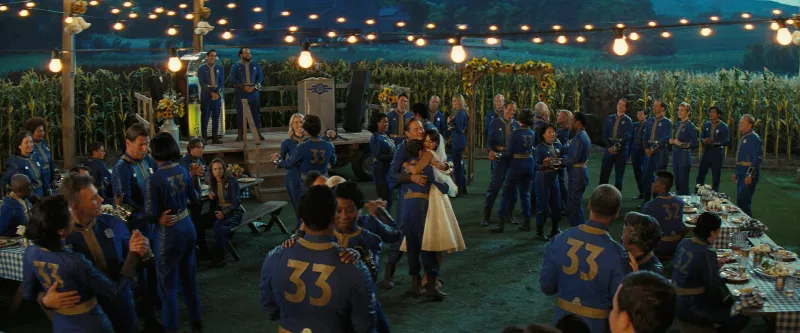
We are very lucky to have Todd’s involvement, as well as [Bethesda director of publishing] James Altman, who is on set with us a great deal of the time. We love the games, and all of our department heads from Howard Cummings, our absolute genius production designer, to Jay Worth, who oversees visual effects for us, everyone pores over the games and we try to get every detail right wherever possible. I hope that fans see that when they watch the show.
PELY
I’m super relieved how production approached [the visual elements] on the show. They clearly love the games and wanted to be as authentic to the games as possible. Very early on, their communication with us was, like, “Just give us everything.” Like, we gave them so many assets from the games, and they used that. They would 3D print from our 3D files and they would constantly be asking us for additional content from the games. They used as much as they possibly could, directly from the games, with very little filtering through it. It’s as close to one-to-one as I could possibly hope. I can’t see how they could have been any more authentic to the Fallout visuals than within what they did, which is not to be taken for granted because it’s so common for that not to happen.
NOLAN
It’s always a little scary, partnering on an adaptation, especially with something that Todd and his team over there – and it’s an incredible team – have been working on for decades. It’s a little intimidating, but they’ve been the best partners you can imagine. Always a resource. In some cases, we’d be sending over [computer-aided design] models of props, that we can basically then directly print. It’s been kind of a labor of love from the beginning for all of us.
WALTON GOGGINS
Actor, “The Ghoul” in Fallout
My interest, first and foremost, was Jonathan Nolan and the writers of this show, and it was the words on the page and the way in which they described this world with prose. Not knowing how we were really going to pull this off, and then going through that experience in Season 1, and then getting to meet people all over the world and getting to participate, as a guest, mind you, in conversations about what this game means to them, and has meant to so many people, it just changed my whole perspective, didn’t it?
MOTEN
It’s such a wonderful thing, what Jonathan Nolan, Graham, and Geneva have created with this way of walking through this world with these new, original characters. It doesn’t feel like we’re recreating anything from the game; it really feels like we get to live in the world of it and be a part of bringing that thing to life.
ELLA PURNELL
Actor, “Lucy MacLean” in Fallout
I have three younger brothers who like the games. I hadn’t played it, but when I found out I got the part, I tried to. I’m not very good; there’s something wrong with my thumbs. [laughs] I just can’t do it, but I did do a lot of research on the world and Vault Dwellers and Vault-Tec, and I ended up watching a lot of other people playing the game, which worked out a lot better for me, because I got to experience it without having to suck at it!
GOGGINS
I’ve never played a game; I had heard about it, but not that much. I have a [teenage] son and he’s a big, big Bethesda player, and Skyrim is his game. But after having the conversation, reading the script… you know, that’s the obvious question: When you’re playing a real person, do you want to meet that person? If you’re playing a video game, do you want to see or play that video game, and for me, I felt like the way that I can contribute to this story the most was to be kind of an outside observer and a person that can keep them honest about the story, that isn’t influenced by adhering to the myth of the game. I mean, it’s one of the biggest, most important games ever produced. And that’s how I felt that I could contribute.
AARON MOTEN
Actor, “Maximus” in Fallout
I am a gamer; I really enjoy taking a break from watching TV and movies. It’s work for me, and I really have a hard time turning that brain off when becoming a viewer. I have not played Fallout, but I have watched Twitch streams, you know, I’ve watched others play it. But, partly, I forbid myself from playing it at this point. It’s our job to bring a sense of humanity to these three characters.
GOGGINS
That being said, we had Mr. Howard there and James Altman from the games, and Jonah’s been playing the game since Fallout 3, and Graham Wagner, I think it’s all he did for a decade. [laughs] We had so many people who just kind of had our back.
MOTEN
The things that we’ve gone through as a global community with COVID and how things drastically changed for all of us, but our own human subversive sides are still there. We found a way to continue to connect with each other. Something that’s akin to Fallout is factions. That’s humanity trying to restart itself again, and there’s just these different positions on it, and I think that’s one of the wonderful things about the three of us.
GOGGINS
For me, it was all on the page. They did their homework, and it was built into the DNA of the story that they created, and this isn’t like Fallout 1, Fallout 2, or Fallout 3… it’s its own thing. It’s original content within the Fallout world. In some ways, people have said, “Is it Fallout 5?” That’s way above my paygrade. [laughs]
You follow good storytelling no matter where it is, right? And games that are being adapted into movies and TV shows right now are that way for a reason. That’s where the great stories are, and Fallout is a great story. And built into that story is the possibility of the future. That’s how it starts, man. I mean, it’s in the 1950s and that’s Pax Americana, and all the rest of it. And then – excuse my language – the f---ing world ends as we know it, and what they’ve done here is they’ve taken civilization and broken down the cultural differences between the haves and the have-nots.
KYLE MACLAUGHLAN
Actor, “Hank MacLean” in Fallout
I think the world itself is so immersive, so interesting, so complex, that it made sense that we would create a story on top of that, utilizing as many of those elements as possible. I think the real win is the fact that our writers and creators have done such a wonderful job in terms of creating characters that you believe live there. And then, as the series expands and goes forward, these characters are developing and getting more interesting and more complex and more deep. I think that’s a testament to the quality of the people that are doing this.
Fallout Season 1 released on Amazon’s Prime Video streaming service on April 10, 2024, to a 93 percent on movie and television aggregate site Rotten Tomatoes and a 73 on Metacritic. According to the official Fallout on Prime X account, more than 100 million have streamed the first season.
CAIN
I went to the premiere of the show, and it was very surreal to watch. It came up on IMAX, and it was just a very surreal experience. I don’t really know how to describe it. It was not something I ever imagined would happen, and so when you’re in the moment, it just didn’t seem very real.
BOYARSKY
It is surreal, but I think it’s less surreal or less shocking because it was a slow process. There was a period of time where when I talked to people about, “Oh, you made Fallout! Oh that was such a cool game,” and it wasn’t, “My god, you made Fallout!” It was just, “Oh, that was a cool game I played back in high school” or whatever. “That was a great cult thing that I liked at one point in time.”
BROWDER
When the first season of the Fallout show came out, I was on an airplane, flying back home from the BAFTAs, and I looked around me, and the amount of people who were watching the Fallout series was just trippy. Then, I promptly watched the series on my own because I hadn’t seen it at that point. It’s crazy to watch something that you’ve had a part of blow up.
HOWARD
It’s one of those things where, when you make a game, you love it, you still don’t know how it’s going to land, like, “We’ll see how this audience takes to this.” But when you’re in a franchise, you kind of, in your head, know what you’ve changed, what you haven’t changed, and where those lie when it comes to TV. We were definitely like, “We love this,” but you don’t know how it’s going to land, and we’re so fortunate that all the fans and even people outside of that, who never played Fallout, just love the show and all the accolades it gets.
FARGO
I think they just nailed it. The fans love it; I like to watch the fan reaction. I knew they nailed the aesthetic and with the music and the pop ups that make it feel like a video game. I thought they really nailed all that stuff. Perfect. And then, bang! It resonated. That’s why it was a number one show.
GONZALEZ
I really liked the first season. I thought that they made some great choices in terms of the characters that they chose and what those characters allowed them to do: Having this Ghoul character who has memories from the pre-war past, having this kind of naïve Vault Dweller, having a Brotherhood of Steel character who’s not the knight, but sort of the Sancho to the Don Quixote. And just some really interesting, unexpected choices. And then, I think of the visual realization of that, and a lot of the scene writing and story writing is very strong. I think they’re doing justice to Fallout, and that’s been very cool.
BROWDER
I think the hope and dream of any person is that what you’re doing in the world matters and what’s cool about Fallout becoming mainstream… like, Fallout matters to the gaming community; it has and it continues to. But now, Fallout matters to the television community, and that’s a cool thing to be a part of and to watch. I think all of us feel a lot of pride in that.
PAGLIARULO
I think one of the things about Fallout is it’s unique in that, with the games, it’s almost like two universes. There’s the pre-war stuff and the post-war stuff. So, you get different stories that you can tell. The Amazon show does that perfectly: We get to finally see what life was like before the bombs fell. And that’s something we’ve only dove into a little bit in the games, like at the beginning of Fallout 4, and some of the Tranquility Lane stuff in Fallout 3, but the show really pushes that.
PELY
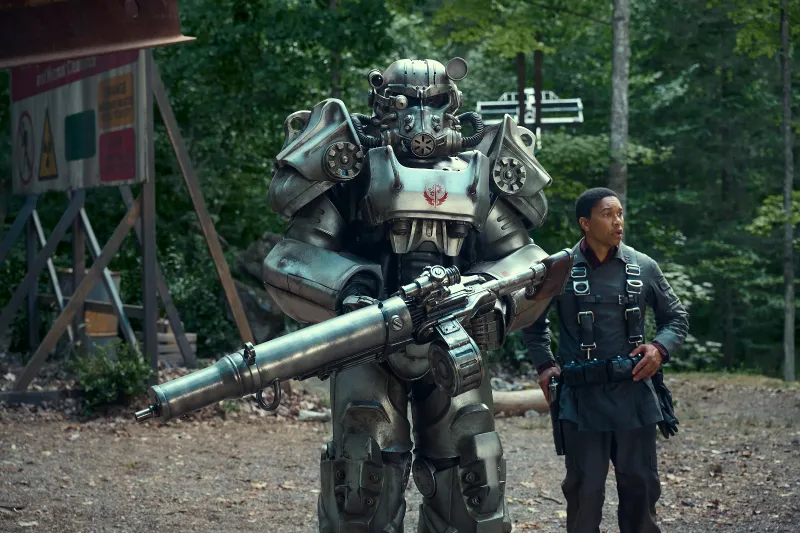
I was especially blown away by the Power Armor. Other than Workshop, that was the other big thing for Fallout 4: We’re like, “We’ve got to make the Power Armor feel like a vehicle. It’s got to be a mech. It’s got to make you seven feet tall and actually feel like Power Armor.” But how do you translate that to something physical? The show doesn’t take shortcuts. They built it. It would have been an easy out of just making it CG and, you know, job done. But they pulled it off. They made the effort, and I’m so thrilled how it came out. It’s like, yes, that is exactly how it should feel. I think that was probably the biggest jump for Fallout: a jump to a new medium – onto TV – and it could not have gone better.
HOWARD
The tone [was the biggest success of Fallout]. When you talk about Fallout, “Okay, what’s the tone like?” Almost all of our initial conversations are tone. So, what’s the tech look like? What’s the music? We pull from some of the games. Okay, what’s the violence like? What’s the humor like? Let’s test it. What level of violence is too much, where it’s going to get, you know, it’s like a horror movie in a way. “Some of that,” or “You need a dash of that.”
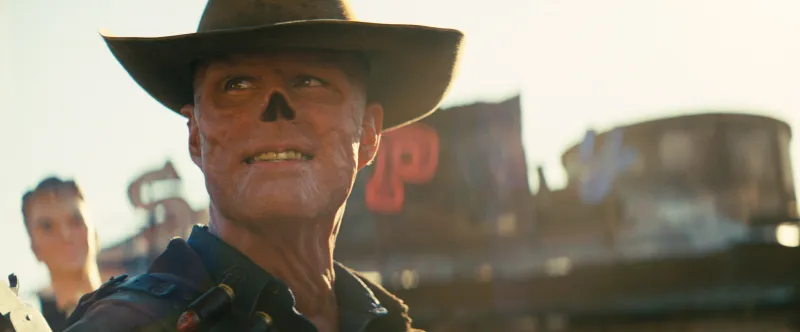
I would always reference the scene in Pulp Fiction where they’re riding in the car and they blow off the guy’s brain in the back. To me, that’s the right… it’s violent, but it’s also kind of funny. So, we would go through that, and then, humor level. For me, it was a great learning process of what’s most important with TV, which is the characters. They came up with some great characters. And I remember when they first pitched the Ghoul character, this person that had lived before, so we could tell both stories, like, “Okay, how can we show this stuff in the past?” And I think they just did a brilliant job with the whole thing.
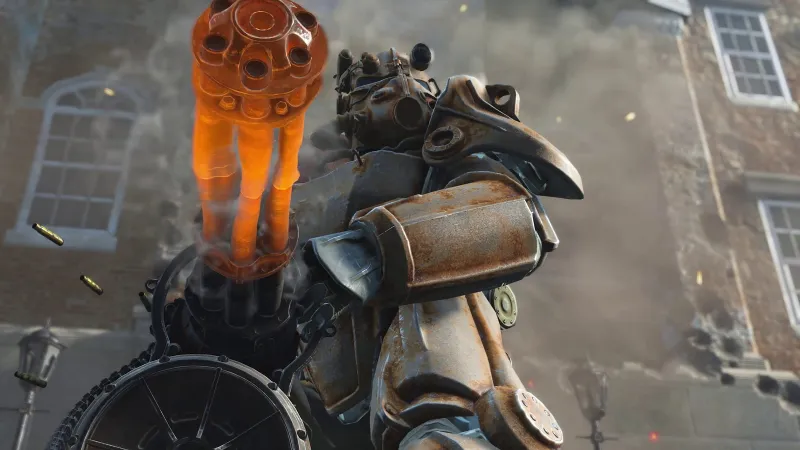
Despite not releasing a new Fallout game in several years, Bethesda noticed an uptick in interest in the franchise, with Fallout 4 seeing a spike in sales and Fallout 76 reaching more than 1 million unique players in one day during Season 1’s airing.
HOWARD
We had been told, “Hey, get ready. It’s going to be really popular and people are going to flood to the games.” And so, we were kind of ready, particularly with Fallout 76 being the one that we’re still actively developing with a large team – a game that became incredibly popular – and then, all these players coming into that game also because it’s social and it’s the newest one. We were blown away by how many people came and it became this very hardcore audience of Fallout 76.
There was this awesome moment, because the show is popular in Season 1,and then everybody starts playing Fallout 76, so there are all these Vault Dwellers – like, level 1 Vault Dwellers – coming out of the Vault, and the elder players are like, “This is awesome!” And there was sort of this meta thing where they were leaving presents for the new players. It just became this, I think, just really wonderful moment.
RUSH
I think players see that show that maybe hadn’t played a Fallout before they see that show, and they experience the story and the environment and the characters, and they want more of that. We’re fortunate to be working with folks on that show who are huge fans of the games themselves and have great respect and understanding of the lore and the universe. So, as a viewer that sees that, I want more of that storytelling. I’m going to go to Fallout 3, to 4, to New Vegas, to 76, and I get to experience a lot of that for myself.
BROWDER
The really cool thing about the Fallout TV show is we’re heavily involved in it. It’s a collaborative thing, and because we do care about the lore, we’re heavily involved. But then, you see the opportunities [for the TV show inspiring the games] – like The Ghoul [being in Fallout 76] – but we want to do them in a way that’s still true to our brand and still true to us, right? So, The Ghoul makes sense; he’s been wandering the Wastelands for hundreds of years. It makes sense in the story, so we’re going to take those opportunities when it makes sense. But none of us want to do something that cheapens our brand.
RUSH
How we’ve supported that in 76 is, while the show is, like, way up here in the timeline, and 76 is way back here in the timeline, we can’t have Lucy running around Appalachia because she’s not even born yet. I mean, s---, her parents aren’t even born. But we can have The Ghoul, and The Ghoul’s a pretty popular character. The Ghoul is fun and, “Hey, we’ve been wanting to come out with this new Bounty Hunting feature. Wouldn’t The Ghoul be great to host something like that? Wouldn’t that be fun for players to see and experience?”
We’re always on the lookout for ways to draw parallels to things that are happening in the show or maybe remind people of the show, but because of the huge difference in time and space – they’re over here on the West Coast, we’re on almost the opposite side – there’s only so much we can do, but we can support small threads here and there that remind players that it's all in the same universe.
HOWARD
I think in the Fallout community, as we come to Season 2, we were more prepared in terms of, “Okay, people are going to see the show. They’re going to want to come to Fallout 76. How can we make it even stickier in terms of that. And that’s where you see Burning Springs, and we have the Ghoul character, voiced by Walton, who did an amazing job. You’re seeing more of a direct connection to something you can see and experience on TV week to week, and then you can play a bit of that in the game.
Fallout Season 1 received three nominations at the 2024 Emmy Awards. Fallout also won “Best Adaptation” at The Game Awards 2024, the Golden Joystick Awards, and from Game Informer. On April 18, 2024, just over one week following the first season’s debut, Amazon renewed Fallout for a second season.
GONZALEZ
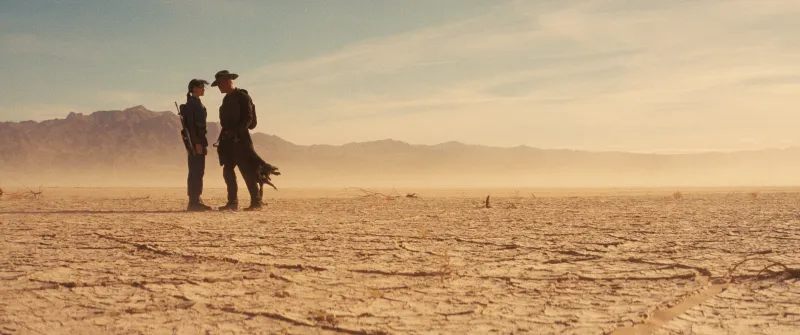
[Finding out Fallout was going to New Vegas for Season 2] was having friends message me. I had no idea about that. Part of doing work in video games is sometimes it’s a little bit like doing comic book work in the ‘60s and ‘70s: You don’t own any of it. You’re doing work for hire. And so it’s, like, “Oh, you created Spider-Man? Good for you.” What you get for that is people know who Steve Ditko is, but it’s not a character you own. There are no residuals. There’s not even direct credit for it.
Tim Cain and Leonard Boyarsky… There's nothing in the credits that says it’s based on this world that was created by them. They did create the world, and it was a master stroke of world creation in terms of this very unique aspect that they had of not setting it in the expected Cold War of our history, but instead, shifting it forward to a retro 1950s kind of Cold War on the brink. What that shows is that the creative work that’s gone into the games was of a quality that it could enable people to expand that into this kind of linear television format. And I think the people who are doing that are, so far, doing it in a really smart way.
GOGGINS
Going into Season 2, I have met so many people… I understand the theology this is to people, and the reverence that they have for it. And that’s happened to me too: I care so much about this world! And the creators of this fictional story within the canon of Fallout care so much about this world. And so, as your relationship to it deepens, it just becomes richer. We just got back from a gathering in Goodsprings, Nevada. To be there that afternoon, and to see the love and the community around this experience, it’s awe-inspiring, man. I’m so grateful to be a small part of that.
PURNELL
It’s so funny how something I was sort of vaguely aware of six years ago is now 90 percent of my life and means so much to me. [laughs] It’s funny how that happens. I don’t think I can ever put words to what it means to me now. This thing has changed my life and introduced me to people who I will love forever – a game that I will love forever. And also has helped me understand video games and fans and fandom and passion and all of those things that I had such little understanding of before, but now just feels like the heart and soul of everything we do.
ROBERTSON-DWORET
Honestly, one of the hardest parts about making this show is the Fallout universe, [there are] so many toys, so many creatures that we want to play with, so many factions, but we also don’t want to blast through them so quickly that we’re just kind of skimming over them or not giving them the time they deserve to, say, really dig into a faction’s culture or dive into characters who are living there. So, we try to go fast enough that we get to play with as many of the things as we feel like we can well in a season, but we also don’t want to go through things so quickly that we’re not doing them justice.
The other thing I love is we do things practically. That was a methodology that Jonah pioneered for us in Season 1; we actually build our creatures. So, I’m really excited for fans to have a really tactile experience for what it’s like to have a Radscorpion attack them. [laughs] Because we really built those things! And many puppeteers handled them for us.
NOLAN
We’re sort of naturally slowed down a tiny little bit by… these things aren’t easy for the team at Bethesda to build in the games, but they’re particularly difficult for us to bring into the real world, especially the bigger creatures. And then, the really big creatures… so, you space yourself accordingly, but I think every season has some pretty amazing challenges, and we’ve already got a pretty good idea of the challenges for Season 3.
Fallout Season 2 debuted on Prime Video on December 16, 2025. It received a 97 percent score on Rotten Tomatoes and a 73 on Metacritic.
The Future of Fallout
THE FUTURE OF FALLOUT
“Our job is to make that as meaningful as possible…”
CAIN
I like what [Bethesda] has done. It’s not what I would have done. I know Leonard and I especially, we talk about these things a lot. We would have gone in a different direction, but obviously, sales say people love what they did, and I’m looking at my glass cabinet full of Fallout goodies, some of which are from 1 and 2, and some of which are from 3 and 4. So…
BOYARSKY
I played 3 and 4, and I liked both of them. I felt like where they were going with some of the art stuff was really cool in Fallout 4. I thought Fallout 3 was really good for what it was looks-wise, but it did have a little bit of that green overcast thing, and I feel like it wasn’t as crisp as I might have wanted it to be, but this is hindsight talking.
But I think Fallout 3, for me, was much closer to what we would have done with it in terms of RPG-ness, as opposed to something like Fallout 4, where they moved away from it a bit.
FARGO
I would say it’s almost like [Bethesda has] treated the games like they treated the Amazon series, which is, “Let’s focus on the world's sensibilities and feeling. And if we nail that, then the audience who came from before will appreciate it for what it was.” I think that’s what you’ve got to give them credit for, because it was between the music and the aesthetic and everything else, you could tell, they placed that up on the forefront. And then, they did whatever they wanted with it, which, whether it was Fallout 76, Fallout 4, or the Amazon series, it all led with the vibe and aesthetic of what the original games were. I believe that was their focus, and you’ve got to say, it worked.
HOWARD
Even as we got to the TV show, it’s like, “What’s the main character?” The main character is the world, and so, when the main character is the world and what it means and how it feels, it becomes easier to bring it [to new genres and media].
BROWDER
It’s this weird correlation for me, as I’ve expanded and I’ve gone up, and my reach has expanded, so has Fallout’s reach. When I started on Fallout years ago, it was our first game, we were trying it, we were bringing Fallout back to the industry. Right now, Fallout is mainstream. Fallout has a television show. It has a mobile game. It has a lot of things, right?
Despite Howard’s 2022 quote to IGN about Fallout 5 coming after development of The Elder Scrolls VI, and a 2025 report from Windows Central’s Jez Corden that Fallout 5 was greenlit, but would take a backseat to Starfield DLC and The Elder Scrolls VI, the future of Fallout video games remains murky. The Elder Scrolls VI still does not have a release window, despite being first announced in 2018.
PAGLIARULO
I think it starts with making quality entertainment. You have to do that first. You have to make great games. And they’re all different Fallout games; we have different fans that gravitate towards different things. There are the hardcore Fallout 3 fans, there are the hardcore New Vegas fans. The 76 community, now, is really incredibly strong.
HOWARD
Looking at 76, we’ve never stopped developing Fallout. We’ve had a full team on it for a long time, so Fallout, as a franchise, is the one that we’re still doing the most work in, above anything. Now, the majority of our internal team is on Elder Scrolls VI. We are doing other things with Fallout that we haven’t announced. And, you know, there’ll come a time for that.
I get the sort of anxiety from fans, like, “What else? Feed me!” But, look, we’re working on stuff. And, you know, we do like to wait. And so, I think there will be a moment to talk about [the future of Fallout], and we want to make those special moments for our fans.
PAGLIARULO
I would be happy with a game that is as successful as the previous Fallout games that continues to give fans what they love, you know, and to give them a story that they can get into and systems that they love and really just an experience that they play not for 20 hours and not for 100 hours, but an experience they can play for 200, 300, you know, 600 hours, because that's the kind of games we make. That would be my hope going forward: Keep doing what we've done, and also to evolve.
And evolve in a way that is where the industry has gone and where players have gone, so you're not stuck in the past. Like, in the Oblivion remaster that came out, people forget in the original Oblivion, you couldn't sprint. So, of course we're going to add that in the Oblivion remaster. Things like that. The industry moved on, and so, we want to move on with it.
BROWDER
We're very blessed to have a very long-tenured team, as well. And so, all of those learnings from every single one just keep going with us, and I think that one of the things that you can see the natural progression as we've made our titles is we do listen to our players. When we start our big, big list, part of what we write down is everything our players want. We do listen to our players, and we do take that in, so that all wraps into this moment of what it all is going to be like.
HOWARD
With games – particularly role-playing games where you can put yourself into it and spend a lot of time – I’m always reminded, when I meet fans, how important that time is to people. They want to revisit it in new ways. As long as we really understand that – that our job is to make that as meaningful as possible for everybody and don’t take it for granted – we’ll do the best work we can.
It’s obviously a whole team, and we have had a lot of people that have worked on it. We’re just over 20 years. We started in 2004, so it’s just over 20 years for us. We’ve spent a lot of time in this world, and it’s been… you know, we’re very lucky.
Ready to dive deeper? Head to…
On
On
Off
Off
Products In This Article