Feature

An Oral History Of Fallout, Part II: The Bethesda Era Begins
Todd Howard and other developers from Fallout 3, 4, and New Vegas share how they flipped the franchise on its head
INTRODUCTION
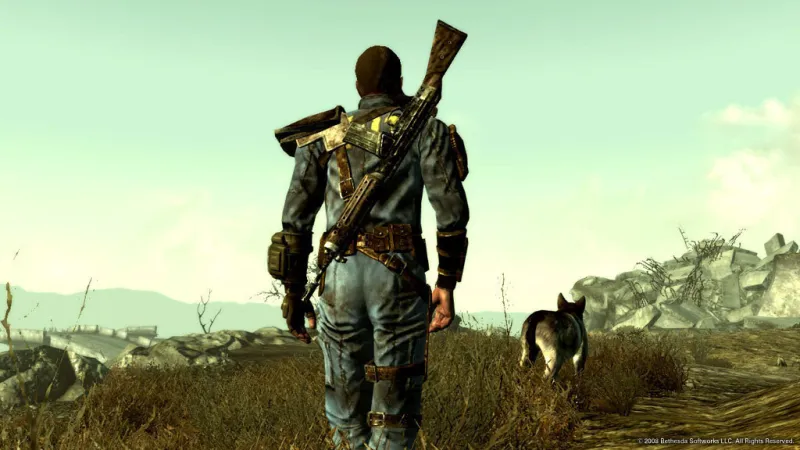
Following the acquisition of the Fallout IP, Bethesda Game Studios' development team, led by Todd Howard and Emil Pagliarulo, needed to figure out how to take the isometric RPG blueprint laid out by Tim Cain and Leonard Boyarsky and bring it only to Bethesda's style. The result was the elevation of the Fallout franchise into a mainstream smash hit.
The Oral History Of Fallout Guide
The Creation of Fallout
Part I
The Beginning of the Bethesda Era
Part II
More Fallout Coverage
SERIES HUB
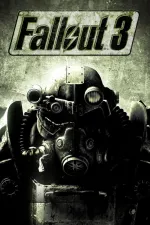
Fallout 3
FALLOUT 3
“I just remember being like, ‘I don’t know how this is going to work.’”
TODD HOWARD
Game director of Fallout 3 and Fallout 4; executive producer of Fallout Shelter, Fallout 76, and Fallout on Amazon Prime Video
I was at Bethesda at the time when [Fallout] came out. It’s my brother who actually played it first. He’s like, “Have you played Fallout?” And I said, “I haven’t had the chance yet.” He said, “You’ve gotta play it.” I actually stole his disc and never gave it back to him.
I loved the vibe of that game. There were things that were sort of post-apocalyptic role-playing on the pen-and-paper side to where you had Gamma World and, obviously, Wasteland, which was kind of a precursor to Fallout. So, I’ve always been interested in the rules of a world, and I felt that, obviously, the way the game played, but the rules of the world and the vibe of the world, they were just brilliant and so unique. And the Vault Boy and the way it would wink at the player in certain ways. Yeah, played it to death.
EMIL PAGLIARULO
Lead designer of Fallout 3 and Fallout 4, writer of Fallout Shelter, design director of Fallout 76
Before I became a developer, I was a game reviewer for a now-defunct website called The Adrenaline Vault. I was editor-in-chief of the site, and I had a little bit of a conversation with one of the reviewers, a friend of mine, who wanted to review Fallout because it was coming up. And he talked me into it; he had to do the review. So, we sort of argued back and forth, and I let him do the review, but he ended up sending me his disc. He, with a magic marker, drew a big mushroom cloud on the disc, and so, that was my introduction to Fallout. I fell in love right away.
HOWARD
People say, “Oh, you were doing Elder Scrolls for a long time, and then you went post-apocalyptic.” So, actually, when I started, it was doing [The Terminator: Future Shock]. So, we would do Terminator, Elder Scrolls, Terminator, Elder Scrolls. So, we were actually doing post-apocalyptic, fantasy, post-apocalyptic, fantasy, and then we stopped for a bit. There were all these rights issues with Terminator, so it’s actually a very short period where we only did Elder Scrolls, and then we’re like, “We’d like to do something else.” And the Fallout IP was not being used, and Interplay was having issues, kind of left behind. And it was, “Well, if they’re really not doing anything with this, we would love to take a crack at it.”
ISTVAN PELY
Lead artist of Fallout 3 and 4, art director of Fallout Shelter and Fallout 76
I wasn’t super familiar with the franchise before we got the license. So, as soon as I heard about it, I obviously started doing a little bit of research and digging into it and realizing, “Wow, there’s something here that is really special and I wasn’t even aware of it.”
ANGELA BROWDER
Associate producer of Fallout 3, producer of Fallout 4, senior producer of Fallout 76, studio and production director
I’m definitely one of the ones who had no idea what it was when I was told that we had bought Fallout and we were going to be making a Fallout game, which was a very unpopular statement at the time – at least on the internet – so it was really interesting for me. [laughs] It's like, we’re going to do something different as a studio. I’m going to be learning about an IP I know nothing about, and I didn’t know what to expect.
So, you know, I did what any good person does when they’re going to be working on something: You go out and you buy the first couple games, and you install them, and you play them, and you go, “Wait a minute, we’re gonna make this isometric thing? What?”
I just remember being like, “I don’t know how this is going to work.”
PAGLIARULO
I had played so many games at that point, and nothing was unique. Fallout was like this… it’s an RPG, but the universe is so completely different. And I had never really been into the post-apocalyptic genre before, and that’s really what got me into it, because it was such a different take. It was so creative. It’s fully fleshed out. It was so real, that by the time Bethesda encountered the license, we didn’t have to create a universe from scratch. It was already there. So it was, what do we pull from it and how do we do it justice?
PELY
It was great because we were a studio that was primarily working on Elder Scrolls. It was all in the fantasy universe, which I love working in that genre as well. But I grew up loving science fiction, hard sci-fi, I love the post-apocalyptic type of that whole vibe. Mad Max is seminal. You know, The Road Warrior was a huge influence when I was growing up. So, it was almost too good to be true to be able to do that massive pivot from classic fantasy to some pretty serious, hard sci-fi, if you look at the post-apocalyptic genre as a subgenre of science fiction.
PAGLIARULO
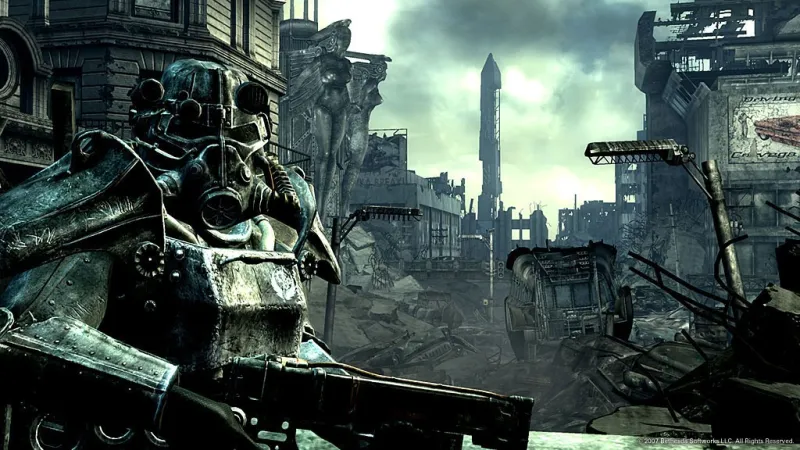
Fallout tends to have different tones depending on what you want to focus on. Fallout 1 is kind of serious; Fallout 2 gets a little bit funnier. […] For our games – the ones developed here – we really wanted the tone to be more serious. Starting with Fallout 3, we really wanted to, you know, what is the horror of nuclear war?
HOWARD
Fallout 1, like, the tone of that game and the world of it became our boilerplate in terms of whenever you go to do something new. We do that with our own stuff, right? When we go to do an Elder Scrolls game, I do kind of like to start over, so you look back across the franchise and say, “Okay, what’s important? How do you sort of file away the age? Like, okay, what’s underneath that? Why do certain game mechanics… how do they make you feel, as opposed to the actual mechanic? What are the unique things about the world?” And if we hadn’t gotten the rights, even so, we wanted to do something post-apocalyptic, but Fallout is just so unique.
PELY
That was probably the biggest challenge on Fallout 3 when it was new to us: It’s a balancing act. Because it is a next game in a series, we wanted to add our own new vision to it, and our own ideas of what things are, but it had to have continuity with the previous games. The first game, Fallout 1, had a very distinct retrofuture ‘50s aesthetic extrapolated into an alternate future kind of visual design to it. It wasn’t as clearly defined as Fallout 2, but Fallout 1 had that. And so we decided very early on, let’s stick with that.
That is going to be the core visual identity of the Fallout universe, that ‘50s take on a retrofuture and lean into that as much as possible. So all of our designs, even if we weren’t sure how to interpret a few pixels on a sprite from the original game, like, “What does Mister Handy look like?” There was a lot of room for taking liberties there, even with Power Armor – a lot of the iconic stuff – we took sort of the broad strokes of the original, the intent, and just fleshed it out how we felt like it would realistically be.
BROWDER
From my viewpoint, I saw no anxiety. Just absolute belief that we could do something awesome in that youthful, beautiful way. I just remember sitting in meetings and watching the ideas flowing. We were a much smaller team at the time, so you’d be in a meeting and there’s like eight people, and it’s like ping-pong ideas back and forth. There’s never these moments when anybody was like, “Can we do this? Are we going to be able to?” Now, maybe that happened above my head at the time, but that sure didn’t happen in the rank and file where I lived at that time. We were all just, “We’re gonna do something awesome!”
PAGLIARULO
I remember one of the first things I did when I got the gig as lead designer of Fallout 3 was I went to my local video store and I rented a bunch of DVDs. It was every depressing post-apocalyptic movie I could find; I mean, the things I never even knew existed. There was The Day After, Testament, Wind in the Willows or something like that – it was an animated one – and I remember I was checking out with all these movies, the woman at the register just looked at me and said, “You’re going to need a sun lamp with these.” [laughs] It really was, like, a really serious tonal thing.
Our tone was serious, but we wanted to bring that levity in. It became very dark humor. We didn’t want to go as funny as, say, the Obsidian style, or like, Fallout 2 or New Vegas. That wasn’t really our tone. Ours are more serious, but lightened up by levity at certain places.
HOWARD
It was like, “Okay, it’s a pretty bleak world. How do we get that other vibe,” and, obviously, Grand Theft Auto has radios, “What if we had a radio and this would let the player choose from some moods, and then the old songs are just such a part of it.” We worked with an outside group, Chris Parker, who licenses music, and “Here’s what we’re thinking.” And he did an amazing job of giving us this catalog of “Here are the possibilities of these types of songs in the ‘40s.”
PAGLIARULO
“I Don’t Want to Set the World on Fire” is a classic Fallout tune, so we knew the tone of the music we wanted to do. One of the funnest things during pre-production was coming up with a list of songs and the list of artists, and really getting that full range of vibe. There’s some patriotic music, but a lot of it is just, you know, there’s “Butcher Pete,” there’s songs like that.
HOWARD
Everybody knew the Ink Spots, but he really delved into a great trove of things I hadn’t heard; “Butcher Pete” is one of my favorite ones. We had so many to choose from. I’d listen in my office, I’d listen to the soundtrack in my car. I had to listen to it a lot because the litmus is, “What song when it comes on, are you like, ‘Yeah, I’ve heard this’ and you skip it?”
We wanted to play it over a long period of time and get to a list of songs that when they came on, you were happy to hear them again, because some songs you hear once and you’re like, “That’s brilliant.” Like, what if I played that every few hours when this game’s gonna go on for a long time? “I don’t know that I want to hear that one 50 times!” That was a really fun process and really happy how it came out.
PELY
Given that these were top-down isometric pixel art games, there wasn’t a whole lot of raw material to work with in terms of, like, figures – they’d be very, very tiny. So, it was also a matter of looking at their influences, like, what sort of things that we know the Interplay folks had used for inspiration when they were developing it, and we had seen some of their development materials, like concept art and the sort of stuff that they used when they were developing it. It was looking at the games, but also trying to get into their mindset – the original developers’ mindset – where they were at, especially aesthetically for the original games.
HOWARD
I reached out to a bunch of ex-Fallout developers, just to see if they wanted to join, or to pick their brains to cast a net in terms of how we might approach it. I had a view for how we wanted to approach, but it was really just getting all the assets, and they helped somewhat. You got to look behind the curtain a little bit, but we didn’t really end up using that stuff.
BROWDER
It’s one of those moments where you just get to – especially being young in my career – where you get to say to yourself, “Alright, I’m going to watch all these creative people do something real creative right now, because, like, how does this transition happen?” And so that was a really cool part of it, and especially in the beginning for me, it was just to get to watch creative minds take something very different to what we had classically done, and update and change and make it a Bethesda Game Studios game in our voice, but also just fundamentally alter so many things about it. It was cool to be part of that transition, for sure. I had no idea what was going to happen, just to be really blunt.
HOWARD
We were always messing with what is it like to experience an open world? At the time, I would say Oblivion was the game that really popularized the… you know, what Morrowind did, but Oblivion did in a different way. And so, the Oblivion-ish-ness of Fallout 3, I think, has to do with, in many respects, it’s our follow up to Oblivion. So, it’s, you know, we’re rebooting Fallout, which people haven’t seen in a while, in an all-new way. But you’re coming off Oblivion, which was hugely popular, so you’re getting an audience that you know expects both.
PAGLIARULO
When I look back at developing Fallout 3, it was a very smart project for us. It’s fairly small compared to our other games. There’s a main quest and miscellaneous quests. There are no factions. You can’t join the factions, right? You join the Brotherhood of Steel, but that’s the main quest. I remember at one point, our lead animator at the time, Hugh Riley, he made a comment in a meeting that said, “We have the opposite of feature creep. We have feature seep,” meaning that we were cutting things. We were really smart about cutting things, because we knew that we couldn’t do it. We were tackling the scale. And so, during development, we felt really good.
PELY
It was a big shift for the studio, especially the art team, having to suddenly go from making very sort of classically pretty art as far as what you would see in an Elder Scrolls game in a medieval setting, specifically going to something that’s far more contemporaneous. We were so conscious of proving that we could do this genre switch and that Fallout would feel very different from what came before, like Oblivion, that I think that informed a lot of how Fallout 3 was a very dark, bleak, very post-apocalyptic type of world.
Oblivion was very saturated and colorful and bright for the most part, and we sapped out the color, we darkened it, we just added grunge, and everything that’s like… it was almost an overcorrection to say, “Alright, we need to make a statement that we’re going to take this seriously and do Fallout justice.” I think that gave 3, specifically, a very, very hardcore visual identity. That was, I think, a surprise to a lot of folks that we could pull it off.
PAGLIARULO
It’s funny, because this was the very controversial thing very early on, with some hardcore Fallout and RPG players, but I was really excited to take Fallout and bring it into the Bethesda style of first- and third-person action/RPG. I’m a first-person guy at heart, and so the idea of playing Fallout like that, not as a shooter, but as a full first-person RPG, but Fallout. It was just the opportunity of a lifetime.
PELY
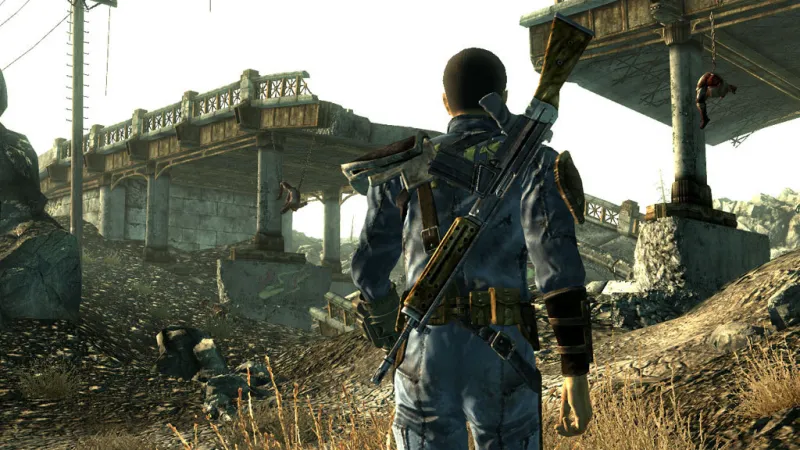
We definitely decided to set it in the [Washington ]D.C. area because that’s where we are. We’re very familiar with it. We don’t have to go far to do the research. There’s just a wealth of iconic elements to draw from. We started there. Obviously, it’s our depiction of D.C., and we had to take a lot of liberties as far as trying to scale it down to a landscape and a world map that was achievable for a relatively small development team back then. So, a lot of the work was just trying to thread that balance of having it feel authentic, but gamifying it quite a bit.
PAGLIARULO
I was always looking for new environments for a game, and I don’t think, at that point, D.C. had ever really been used in a game. I actually think the only environment I had played in D.C. was an expansion for Duke Nukem. That was the only time a game had been set in D.C. So, I’m like, we have a real opportunity to really push on the Americana aspect of Fallout because it’s such a huge thing. And what says “America” more than, you know, the Capitol Building or the Washington Monument, or the Lincoln Memorial?
HOWARD
You, the player, probably wants to go to a few places and see what they look like, but you still don’t know this world. If it’s something that’s completely unknown, like, you don’t know what you’re going to find at all, you have no pre-thought of that area, I don’t think it works as well for a Fallout game, as opposed to, “Oh, I can’t wait to see what this landmark looks like, or this landmark looks like!”
BROWDER
It’s always funny when you do stuff that is located where you live. I think it’s the nature of anytime you play any kind of game where you go somewhere you’ve been, you’re always looking around for something that somehow ties it into the reality that you’ve existed in. I remember when [world artist] Matt Carofano went down to take pictures of the Capitol Building and got yelled at by security guards. [laughs]
PAGLIARULO
Originally, we had this thought that the Metro would be connected completely underground. And we realized it was just too sprawling. It was too big. We had to cut down sections, and it’s a lesson we’ve learned over the years: that being realistic sometimes isn’t fun. Because realism can be fun depending on the type of game you’re making, but traversing miles of underground subway stations turns out very realistic, not very fun.
PELY
Our team was small and every unique piece of architecture… a lot of architecture was built out of kits. You know, we had modular buildings and we could flesh out the world with office buildings and suburban buildings and stuff like that. But when it came to the iconic – like the Jefferson Memorial, the Capitol, and all that. Those were unique pieces of art that would take an artist a while to make.
There was no gameplay around the White House. Level design never said, “Hey, we want to do this here,” so it was easy to overlook; usually if the designers don’t request some assets to build out the made, it doesn’t get made. And then we’re like, we can’t ignore [not having the White House], so it was, like, “Put a crater there. People will buy it.” Of course, it is our version of [Indiana Jones] shooting the guy rather than pulling out his whip and going into a fight. [laughs]
TIM CAIN
Co-creator and producer of Fallout
I grew up right outside of Washington, D.C., so when Todd invited me up to see Fallout 3 at E3 2008 – this was before it shipped – I was blown away because I was like, “Wow, that looks like the Metro station! And that there’s the Washington Monument!” And I’m colorblind, so the whole greenish tint thing didn’t apply to me. [laughs]
HOWARD
The thing that we love the most about games is putting you in a world. And so, I think doing that first-person, and then we have third person, is the best way to do it, where you can kind of reach and touch the world. So, making something believable and alive in that way, I still feel, is the best way to present a virtual world, which is our prime thing. And then, the sort of gameplay mechanics, I think it was more about, “How do you do a role-playing game?”
I think any game where the character you’re playing gets better – you have that dissonance between you, the human, getting better at something, particularly when you start a game and your character on-screen – and where do you draw that line when you do a role-playing game where there’s a lot of action, and you’re in control of it? As it came to Fallout 3, that was the big thing: How do we do this role-playing with guns in a way that feels right, but your character can still improve?
PAGLIARULO
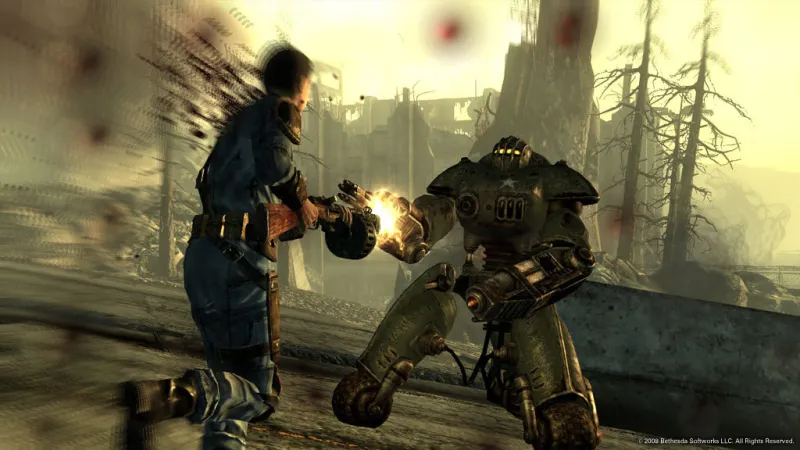
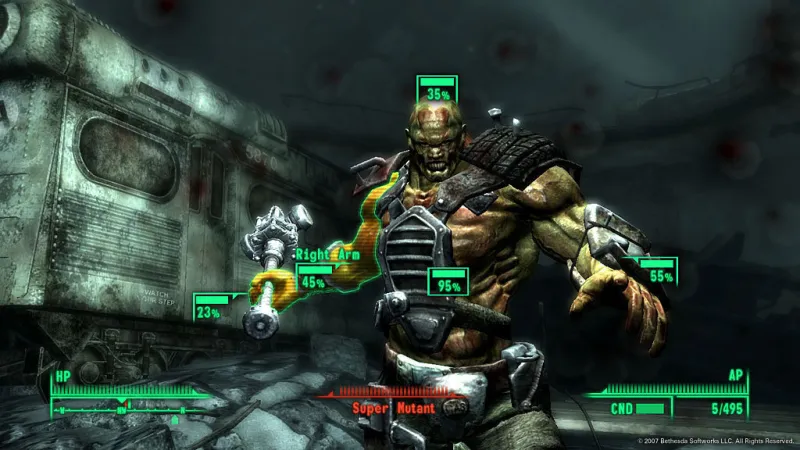
Bethesda, as a studio, hadn’t done gun combat since they did the Terminator games back in the day. So, creating gun combat was a real challenge. And gun combat is a lot different from, you know, there are melee weapons in Fallout, but most of the combat in Oblivion is melee. It’s up close, and most of the combat in Fallout is ranged.
We knew we were never going to be able to, with the time and resources we had, create gun combat that was on par with Call of Duty or Battlefield. So, that led us to creating the VATS system – the Vault-Tec Automated Targeting System.
HOWARD
It's where we came up with the VATS system. I remember pitching it and then talking to Emil about it, him coming with, “This is how it could work.” It’s sort of like [Star Wars:] Knights of the Old Republic at the time, phase-based combat, you can set things up. And this game, Burnout, which was this racing game where you crash. So, Crash Mode in Burnout with body parts mixed with phase-based… we had this little presentation and, you know, “…but imagine the car parts are, like, eyeballs and guts!” That was part of the, like, “Okay, this needs to be kind of over the top,” but also you could stop the game and your character can make some decisions. And that’s where you felt the stats of your character more than the run-and-gun, which we did a number of things with your character stuff there.
And frankly, it ended up where people will play it, like, it doesn’t feel great in your hands because, you know, it’s not the best first-person shooter, even for its time. It’s kind of handicapped as it comes to that, but it still came together really well.
PELY
One of the bigger features, code-wise, that we spent time trying to get right was VATS. It’s my favorite system. I’ve never been great at first-person shooters, and I play exclusively using VATS. And any game now that doesn’t have it, I miss it. I wish I had it.
PAGLIARULO
The sort of vindication for us was, when we did PAX, we had this big live demo of Fallout 3 where everyone could play for, like, a half hour or something. We had renovated this Airstream trailer, and we had this front lawn of a post-apocalyptic neighborhood. We were very nervous. Like, “Hopefully this goes off without a hitch.”
The line to play Fallout 3 was around the corner. We were like, “Oh, we’ve got something here.” Then it was the excitement of people playing and then people leaving. That’s when it was, like, it felt great! Like, whoa. People are buying what we’re selling. They like this vision that we have.
Fallout 3 released on October 28, 2008, to near-universal critical acclaim, with Metacritic averages ranging from 90 to 93 depending on platform, including a 9.5 from Game Informer.
HOWARD
The one thing that we did, we ended up changing in Fallout 3, we were like, “Well, like the other Fallouts, it has to end.” You know, “We’re having this type of character system, these other perks are going to work, and then when you finish it, it’s going to end. You’re going to get this video and then the game ends.” And we thought, “This is Fallout! It’s great!”
People hated it! They expected, like, “Why would the game end?!” You know, “The other games don’t end!” And so we were like, “Well, that was our commitment to that.” And we were sitting around talking about it as we got into DLC, we’re like, “What if it didn’t end? How would we do that?” And so, we kind of went back to the drawing board and figured out a way, as gracefully as we could. I’ll give us an average grade on that to make the story continue.
Fallout 3 received five downloadable add-ons throughout 2009. Before completing Fallout 3, Bethesda Game Studios began preliminary work on The Elder Scrolls V: Skyrim.
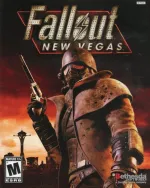
FALLOUT: NEW VEGAS
FALLOUT: NEW VEGAS
“I just remember a simultaneous mix of terror and elation.”
HOWARD
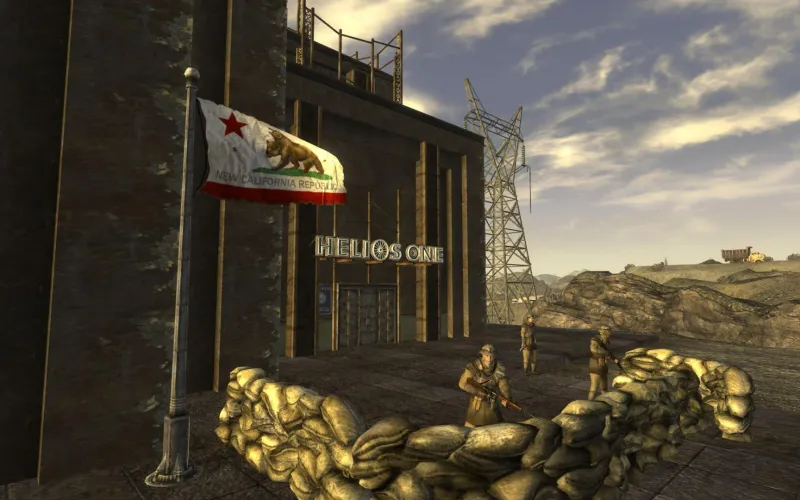
We knew we were going on to Skyrim. The franchise was back and we knew it was going to be a long break ‘til Fallout 4. “How can we keep this going?” We went to [Obsidian Entertainment] and said, “Hey, would you like to do something?” And all we gave them was, like, “We want you to do something and use factions.” We didn’t do a lot of faction gameplay [in Fallout 3].
JOHN GONZALEZ
Creative design lead and lead writer of Fallout: New Vegas
There were these rumors that maybe there would be a Fallout game that we would work on at Obsidian, and I was like, “Really?!” I had joined about six weeks before to work on an Aliens RPG that ended up being canceled, and during the time that I was there, I’d been given a little bit of a trial, because I came in as a senior writer, and I got promoted to essentially the lead writer for that project, but really, just three weeks before it got canceled.
I was sort of wondering, “Why didn’t I get laid off?”
So, the day after Aliens got canceled, I was in my office and I was emailing Feargus [Urquhart], the head of the company, and I was basically writing an email, “I’d be happy to have a job, I’m willing to work on anything, but if there’s any way to be involved in any kind of Fallout thing that we’re doing, I’m happy to just get coffee for people!” To me, Fallout was just like, you know, pinnacle. And literally while I was writing that email, Feargus came into my office and said, “Okay, so you’re the story guy on the new Fallout!”
And I just remember a simultaneous mix of terror and elation.
JOSHUA SAWYER
Project coordinator, project director, and lead designer of Fallout: New Vegas
I was stunned, honestly. When I first came to Black Isle in 1999, it was my dream to work on a Fallout game. The studio got that chance in early 2003, when we were working on our version of Fallout 3. Around late 2003, Interplay started having serious financial troubles. I left Black Isle to go to Midway San Diego and later to Obsidian. When Bethesda bought the Fallout license a few years later, I figured I would never have a chance to work on the series again.
HOWARD
They were the only choice. We were fans of theirs and they had done something similar with Knights of the Old Republic II, and we knew them really well.
SAWYER
This is maybe an overly simplistic view, but in a lot of ways, I feel like the tenets of the franchise were already closely aligned with Obsidian’s. Black Isle’s DNA heavily influenced Obsidian, even with a new generation of developers.
GONZALEZ
At the time that this got greenlit based on the pitch documents, we already knew that the start of the game was you being shot in the head and left in a shallow grave – a very Vegas type of way to begin. And we also knew that there was going to be a climax where there’d be a battle at Hoover Dam between Caesar’s Legion and the NCR; that was known, so when I came in, it was up to me to devise, essentially, the story that would connect that Alpha and that Omega.
SAWYER
In my mind, I went back to what I loved about the first Fallout: being able to go anywhere, to skip sections of the critical path, to kill anyone (or no one) and still complete the main quest. These aren’t elements in all Obsidian games (or Black Isle games) but they felt important for New Vegas. I also think it was important for us to hit a good balance of serious themes with goofball humor. Fallout has always dealt with important topics in a heartfelt way but can also be stupidly hilarious.
HOWARD
The original pitch was an expansion pack for Fallout 3, and it was Fallout 3: Vegas. Looking at it felt, “It’s best if it’s a standalone and you make it everything it can be, and make it its own thing, where it feels like it sits, you know, it’s a bit of a plus-one sequel to Fallout 3, and it kind of sits alongside it, as opposed to just an add-on.” I didn’t think that would do it justice for what they had in mind. And I think they did an amazing job.
SAWYER
We had regular communication with developers from the Fallout 3 team and in QA (notably Ashley Cheng and Andrew Scharf) and they were extremely helpful both in getting rolling and in finishing the game.
We had very few high-level guidelines. Thankfully, we knew the IP well, so they didn’t have to educate us on much. There were a few minor things that Todd Howard had added to the canon or wanted to be incorporated, [like having] a ZAX unit that ran Vault 22. This came out of an idea that Chris Avellone had written for Vault 29 in Van Buren, in which a ZAX unit called Diana controlled the overgrown vault. Todd wanted to limit the number of active ZAX units in the universe, so we just took that concept out.
GONZALEZ
As far as I know, [Vegas] was the only setting that was ever really considered. It was definitely part of the project in the pitch documents, and when I came on, which was not step zero, but basically step one of many, that was already the case. It was certainly something that we talked about a great deal. The first thing that I did when I started working on that game was just read everything I could about Vegas and start watching various reference films, you know, Ocean’s 11 being the obvious one – the original – I think anybody’s who’s played and encountered Benny and gone to The Tops knows that I obviously spent far too much time watching that film. [laughs]
SAWYER
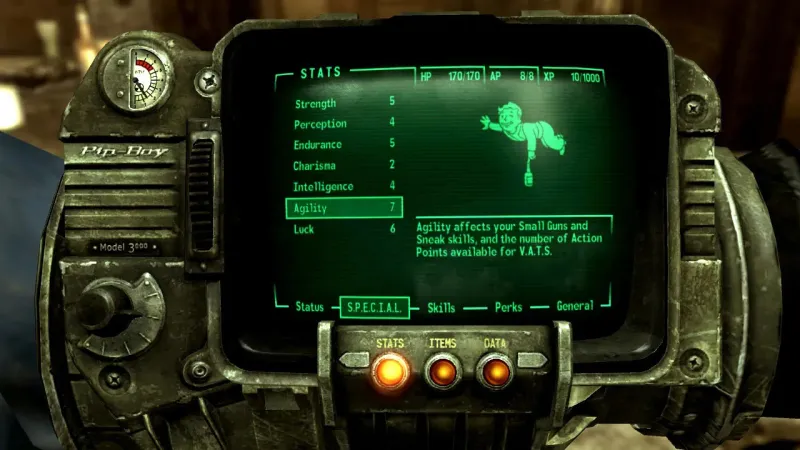
Over the years, I think players have come to appreciate that we really tried to maximize how much freedom they had to play the game and how much we tried to react to everything they might do, from shortcutting the critical path toward Benny to killing important recurring NPCs early in the story. We also leaned into the SPECIAL system, skills, and perks as much as we could in quests, letting the player feel rewarded for building their character in any way they saw fit.
GONZALEZ
One of the things that Bethesda did when they were creating Fallout 3, they used a development kit called the Garden of Eden Creation Kit, and that was where all the tools that we used to do Fallout: New Vegas, which is why we were able to complete the game in a mere 18 months. We were using a toolset that we modified, we added features to, there were gameplay features that were added, all of that, but there was that kind of initial basis.
One of the things that was really fun for me as a writer was that it was really the only project I’ve ever worked on where I was directly in the tools. I was doing the scripting for all of the dialogue and all that, and having to really think about all the logic and logic checks and variables and stuff, which was an aspect of the craft that I learned. I grew tremendously from having to grapple with that.
SAWYER
It’s interesting, because New Vegas was not particularly well-received when it launched. It was quite buggy and both players and critics commented on how much we had reused from Fallout 3. It took about five years for the community to come around on the game and maybe a few years more for us to start considering that players actually liked the design choices we had made.
GONZALEZ
I think the thing that made New Vegas special was the kind of ferocious focus on choice and consequence gameplay. I played a lot of Fallout 3 and I think Bethesda deserves enormous credit for taking this isometric game and turning it into a first-person, immersive, open-world experience, and doing the work of translating that. I think that there have been other Fallout games that have had a different focus. I think that what you have in New Vegas is a very Obsidian-focused experience. It’s all about allowing the player to have tremendous amounts of narrative impact, narrative control. And so, I think that for someone, if that’s your jam, then you’re going to think that New Vegas is the best of the bunch.
Fallout: New Vegas released on October 19, 2010, with Metacritic scores ranging from 82 and 84, depending on platform, including an 8.5 from Game Informer. Obsidian released four content add-ons for Fallout: New Vegas from the end of 2010 and across 2011. Just over a year after the release of Fallout: New Vegas, on November 11, 2011, Bethesda Game Studios released The Elder Scrolls V: Skyrim to Metacritic scores ranging from 92 to 96, depending on platform, including a 9.5 from Game Informer.
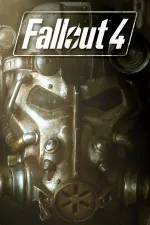
Fallout 4
FALLOUT 4
“Are we trying to do everything?”
HOWARD
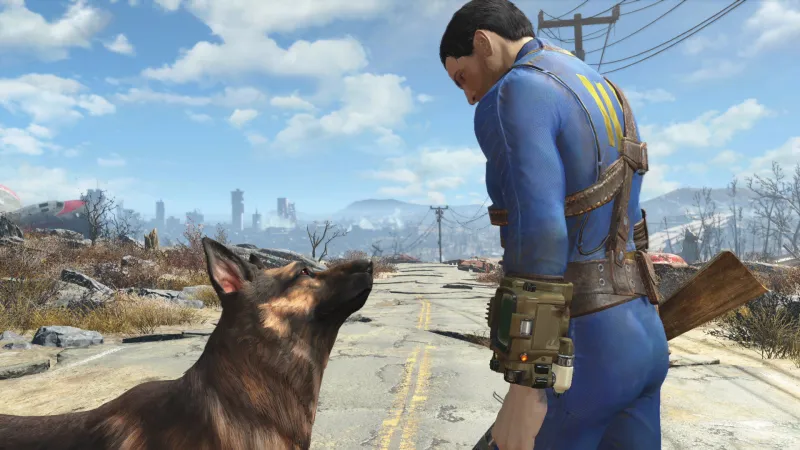
[Our main goals] were to get into factions, tell a story that was a bit more personal with how it started, and that you are making some faction choices in some unique ways. And the other thing I knew from the get-go was I wanted to start the game before the bombs fell, like, show the world beforehand and sync you, the player, with the player on the screen, where you saw the world beforehand, and now, you’ve had this loss, and you’re thrust into a world that has changed and your life has changed, and the way you’re understanding and learning the world is the same. You, the player, and the character, synced up there.
PAGLIARULO
I think by the time 4 rolled around, our team was so tight. Skyrim was like… when we made that game, it was like World Series Red Sox. It was just, like, I used the term that the studio is a starship full of Rikers [from Star Trek: The Next Generation]. Everyone could captain this ship, that’s how good everyone is. We were really tight. We really communicated well. We moved fast on things. We had a good groove. We had been working together for a long time, and I think that was really instrumental as we moved forward.
BROWDER
When I look at that transition between Fallout 3 and Skyrim, and then Skyrim to Fallout 4, I really look at how we, as a development team, worked together and improved our craft and the process. I think with every project, I can absolutely, with 100-percent certainty tell you that we, as a studio, got better. Our process – the process of making a game – got better with every single one.
Skyrim was a huge success and we could have just been like, “Rest on your laurels and just do whatever,” but we said, “Yes, Skyrim was a huge success, but Skyrim as a huge success does not negate any of the learnings that we need to take from the development process of it. We still did that work of, like, what didn’t work? What made making this game hard? How do we improve it? And we implemented that into Fallout 4 and the development cycle.
HOWARD
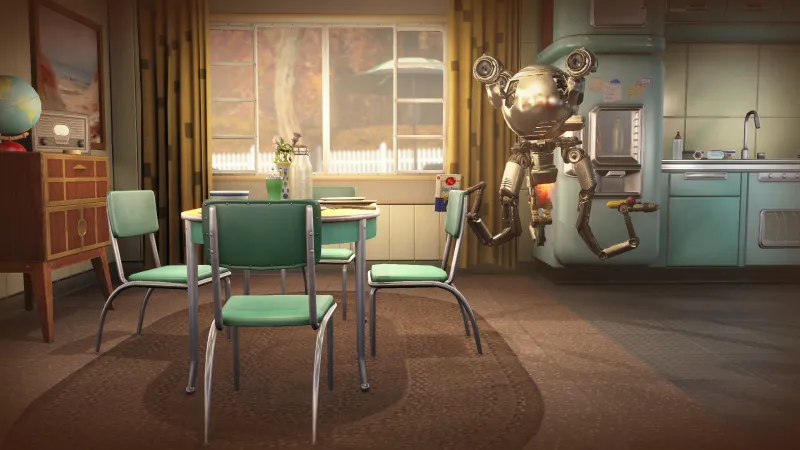
First, we debated location. The original location was actually New York, and we had a story we wanted to do that ended up at The Institute in Boston. There were some other games that were doing New York, and we’re like, “Hey, we’re kind of doing two things. Let’s do Boston, where Emil’s from.” He always wanted to do it in Boston because that’s where he’s from. That’s one of those things where the lead designer really wants something and they know you know that they want it, and they want to be really careful; they don’t want to push too hard.
Boston is a great place where you can tap into the history and the Americana of the franchise in a way that’s unique. And we knew the story we wanted to tell, dealing with The Institute, which is there.
PELY
The tech-based engine had matured a good bit. The team had grown; we had a large team, so it was going to be a bigger game. When you go back and play Fallout 3, I’m struck by, compared to Fallout 4, how decluttered it is. There’s not as much density in the world and stuff to find. In 4, we swung the other way, really making the world as dense as possible, because we came up with the whole crafting system where every piece of junk you can find, you could use to build and craft things. We put a lot of junk in the world to facilitate that. It was just a lot more of everything. We scaled up everything and the tech was a big, big jump, too.
HOWARD
We’re coming off of Skyrim, so it’s our follow up to Skyrim. There was an idea of not having it as visually and tonally bleak as Fallout 3 was, and we want each game to have its own kind of identity. We do it with Elder Scrolls, we do it with Fallout. That was one of the main goals as we went out and did research and took photos of areas that had decayed or buildings that have been destroyed or other things, there’s an interesting colorfulness or beauty to some of that. And we wanted to see if we could bring some of that out, where it wasn’t as harsh a feeling, but then have an area of the map, The Glowing Sea, that was.
PELY
For the art team, Fallout 4 was a big sort of reset. For every game in a franchise, we sort of start from scratch as far as what the visual direction is going to be because we don’t repeat ourselves. The visual style of the game is informed by what the themes are of the game. So Fallout 3 was very heavy on the bleakness and despair, depressiveness of the atmosphere in the world, and it leaned heavily into that. For 4, we definitely wanted to shift away from that to more of the idea of, “There is some hope now,” like civilization is starting to rebuild. So it’s a little brighter.
PAGLIARULO
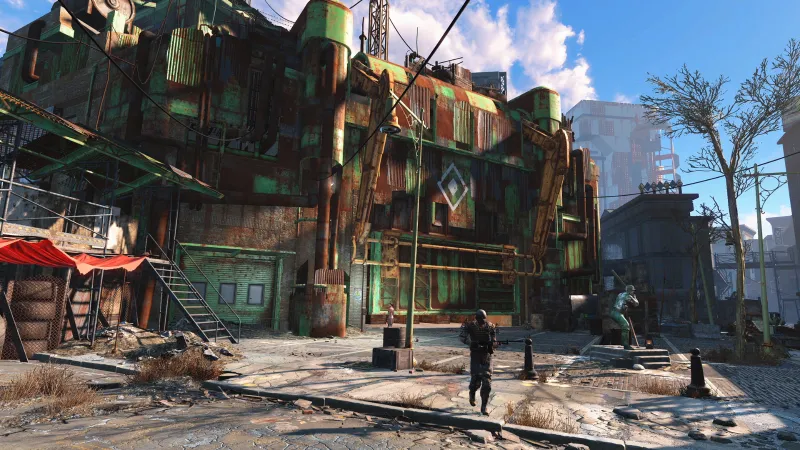
Another big thing that happened between Skyrim and Fallout 4, we really started to embrace this concept of game jams within the studio. Everyone takes a week and does whatever they want, but it has to be something for one of our games, and it has to be something that goes into the game that you can build in the game. And so, it could be a dialogue scene, it could be, you know, in Fallout 4, the Parker Quinn NPC that, if you find on the street and he sells you the charge card, that was my game jam.
So many things came from the game jam. We have this motto: We can do anything, but we can’t do everything. In Fallout 4, it was like, “Are we trying to do everything?” Because there was so much good game jam stuff – jet packs on the Power Armor – a lot of the Workshop [and Settlement] stuff was game jam. And then, you put it in the game and you see how fun it is, and it’s like, “We’ve gotta veer a little,” so we’re always flexible with, like, if something is really fun and really resonates with the players, then we’re going to shift to that, and we’re going to embrace it.
PELY
Implementing [Settlement building] wasn’t easy. That was probably one of our bigger technical challenges as far as a new gameplay system that required a lot of tech support. It was a long road to get it functional, to figure out how the U.I. is going to work. We had a sort of team dedicated to that. The nice thing is there’s sort of synergy with… the way we build our world tends to be very modular and kit-based as far as our art assets.
So, that kind of lends itself to the Settlement system. It’s like, well, you can use those same kit pieces to build your Settlement and shacks and building and all that kind of stuff. As far as making art for it, we could repurpose a lot of what exists in the game, but the biggest challenge was figuring out the U.I., figuring out the tech, figuring out how do we balance letting the player add a whole bunch of stuff to a scene that already has a bunch of stuff in it, because the world is built out, and not tank the frame rate because there’s so many objects we’re trying to render. So, we had to figure out the limitations; we can’t let you build everywhere. We can’t let you build in downtown Boston because there’s just too much density. It’s not going to run.
On June 14, 2015, Bethesda Game Studios and Behavior Interactive released Fallout Shelter, a free-to-play mobile base-builder for iOS set in the Fallout universe. The game earned a 71 on Metacritic, including a 7 from Game Informer. Fallout Shelter grossed more than $5 million in its first two weeks on the iOS App Store, and has since launched on PS4, Xbox One, Switch, PC, and Android.
Fallout 4 released on November 10, 2015, to Metacritic averages that range from 84 to 88, depending on platform, including a 9 from Game Informer. Bethesda shipped more than 12 million units in the first 24 hours, and in 2017, former Bethesda marketing executive Pete Hines appeared on Kinda Funny Gamecast, calling Fallout 4 the “most successful game we’ve ever launched in our company’s history. More than Skyrim, in terms of what we did.”
Bethesda released three narrative add-ons for Fallout 4 in 2016, and leaned heavier into Settlement gameplay and player-generated content, with Creation Club items being released in an official capacity as recent as 2025.
HOWARD
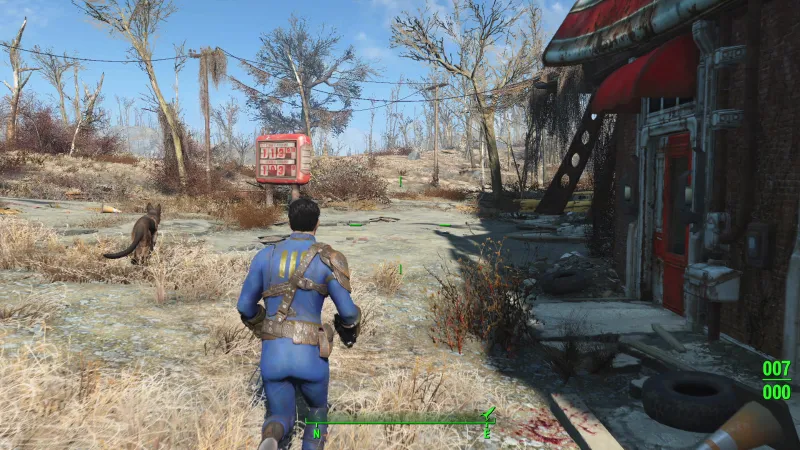
You feel incredibly fortunate. Like, we’re talking about it 10 years later. I think it’s still probably the most played Fallout game right now, and you just feel really blessed that the fans have taken to it and stuck with it. There are a lot of reasons for that. It stood the test of time. Obviously, it did great when it came out – it was a huge moment for us – but it’s almost more important when something stands the test of time in that way.
PELY
It was our first go at [player-generated content], but it was worth it, because I think we realized, like, if we can figure this out, that can become sort of a Bethesda staple. A part of our games is that player-generated content, that crafting component, or what we call “Workshop” in a lot of our games. That carried on to 76 with the Camp system and Starfield with the Outpost system. We got over that hump, innovating that for Fallout 4, and now, it’s part of our bag of gameplay tricks.
Continue to…
On
On
Off
Off
Products In This Article