the game awards 2025

Order of the Sinking Star
The Creator Of Braid And The Witness Reveals His Most Ambitious Puzzle Game Yet
As a puzzle game fan, one of the most exciting reveals at The Game Awards 2025 for me was Order of the Sinking Star, the long-awaited next project by Jonathan Blow, creator of Braid and The Witness, and his team at Thekla. Set to launch next year, a decade after shipping The Witness, this promising fantasy game has as much ambition as it does puzzles – and there are thousands of puzzles – and it’s no surprise that Blow describes the title as “the biggest game of my career.”
Order of the Sinking Star was born out of Blow’s goal of creating his own programming language due to his dislike of working with C++. The years spent on this endeavor are why there’s almost a decade-long gap between this new game and 2016’s The Witness; in fact, Blow started developing this language, known unofficially as Jai, while finishing up development of The Witness.
“[Once] The Witness was done, I pulled that out and said, ‘Okay, we're going to make this a full real thing capable of building commercial quality, not just capable, but way better than C++ to build commercial quality games in.’ And so this game was originally supposed to just be the proof of concept for that, and then once we started doing it, I just wanted it to be a really good game, so we ended up where we are now.”
I hopped on a virtual call with Blow days before The Game Awards, where he walked me through a hands-off demo of Order of the Sinking Star. The game centers on a Queen who flees her kingdom amidst political turmoil, but she’s eventually caught and set to be executed. At the last moment, however, “some kind of mysterious intervention,” as Blow describes, causes her to be transported to a strange realm filled with magic, possibility, and, of course, puzzles.
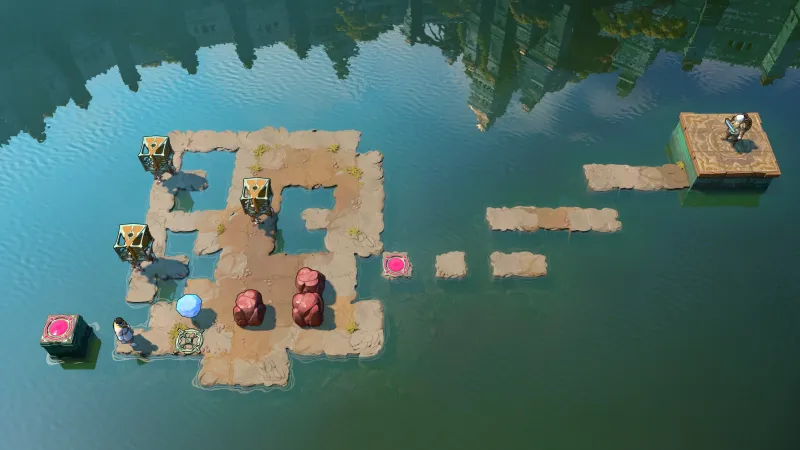
Similar to The Witness, Order of the Sinking Star unfolds within a colorful open world. However, this is a third-person grid-based game played from a top-down perspective. This fantastical world consists of four biomes players can freely explore in any order, each situated in a cardinal direction. Blow describes each biome as “territories that belong to different games.” By that, he explains that each territory is essentially a self-contained game with its own story, characters, and bespoke gameplay mechanics.
Blow begins his demonstration by exploring the overworld as the Queen. He opens the map and zooms out, and while I can see early portions of the four biomes, at least 95 percent of the full map is shrouded in fog. Traveling in either direction pushes away the fog to reveal the diegetic tiles for each land mass, spelled out on the tiles. Traveling east reveals the vibrant green of the Mirror Isles; Heading north takes you to The Hearty Heroes of Hauling; West reveals the rocky cliffs of The Promise; And the southern territory is the only one I don’t get to see.
The beginning of each territory features several stars on the ground; stepping on one of them transports players to a singular level within that world where you’ll occupy a new character. Characters are modeled after classic role-playing archetypes and sport a unique talent. The Warrior is capable of pushing large blocks. The Thief can’t push things forward, but instead will automatically drag nearby objects behind her whenever she moves backwards. This isn’t an option. She must grab objects adjacent to her, engendering thoughtful puzzle-design; if you’re not careful, the Thief can easily trap herself in corners with the objects she compulsively pulls. Another character is the Wizard, who will magically swap places with movable objects within range. Like the Thief, this action happens automatically, so you’ll need to watch how you position him as well. Thankfully, you can undo moves if you screw up or reset the entire level to its original state.
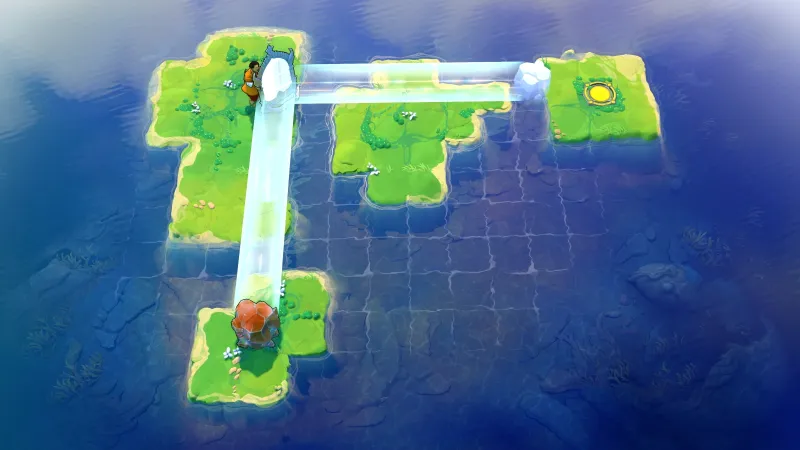
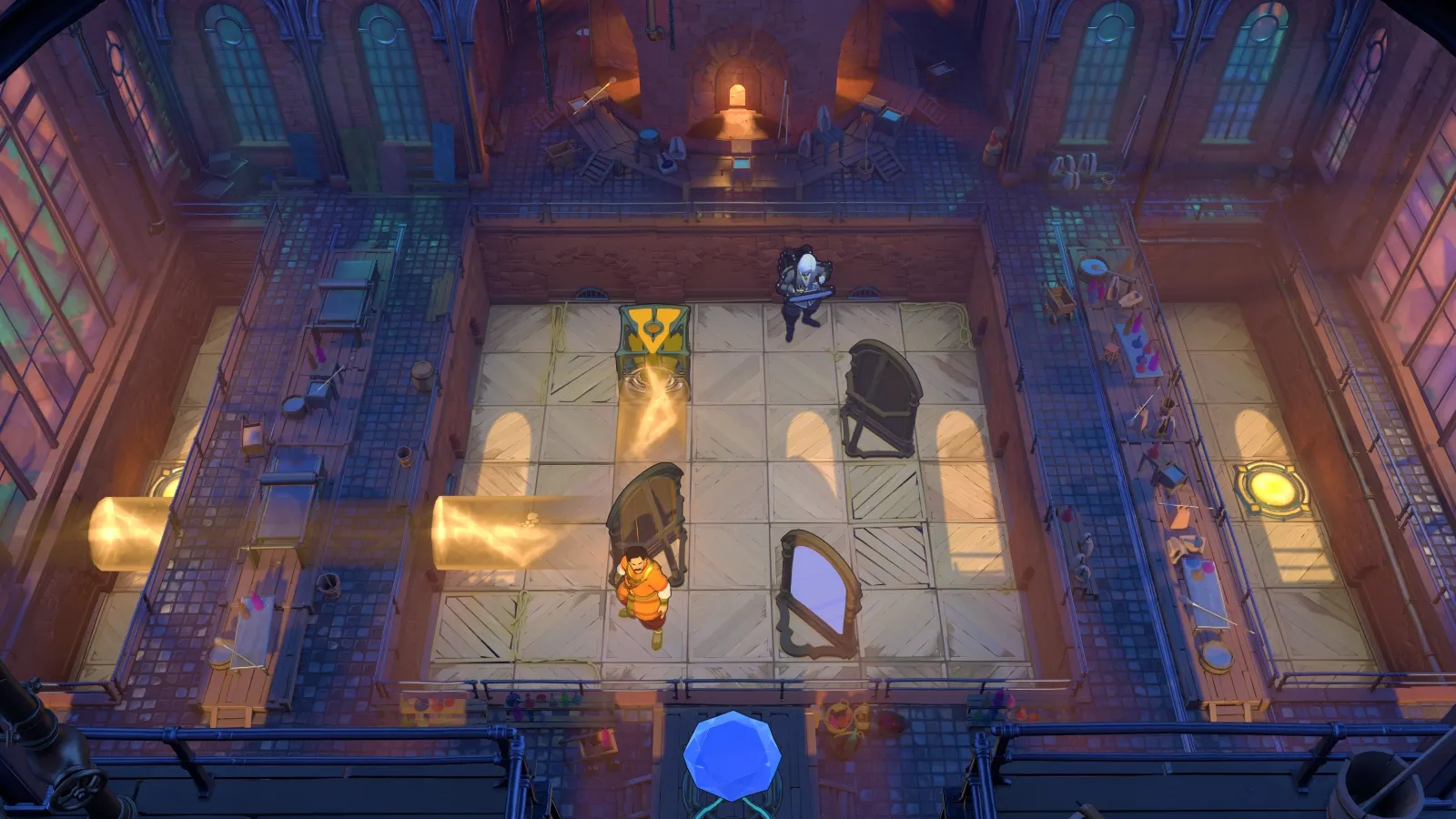
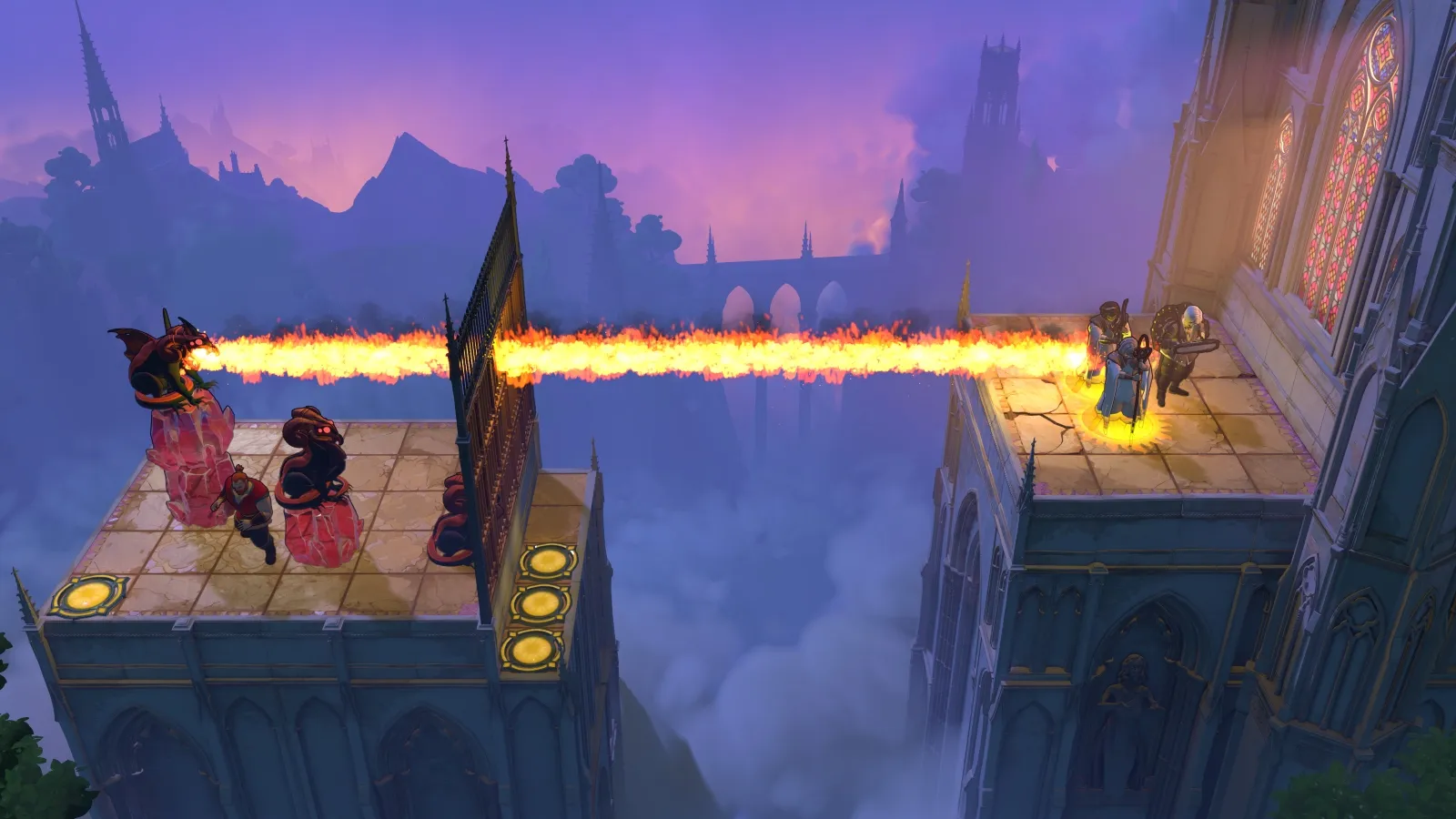
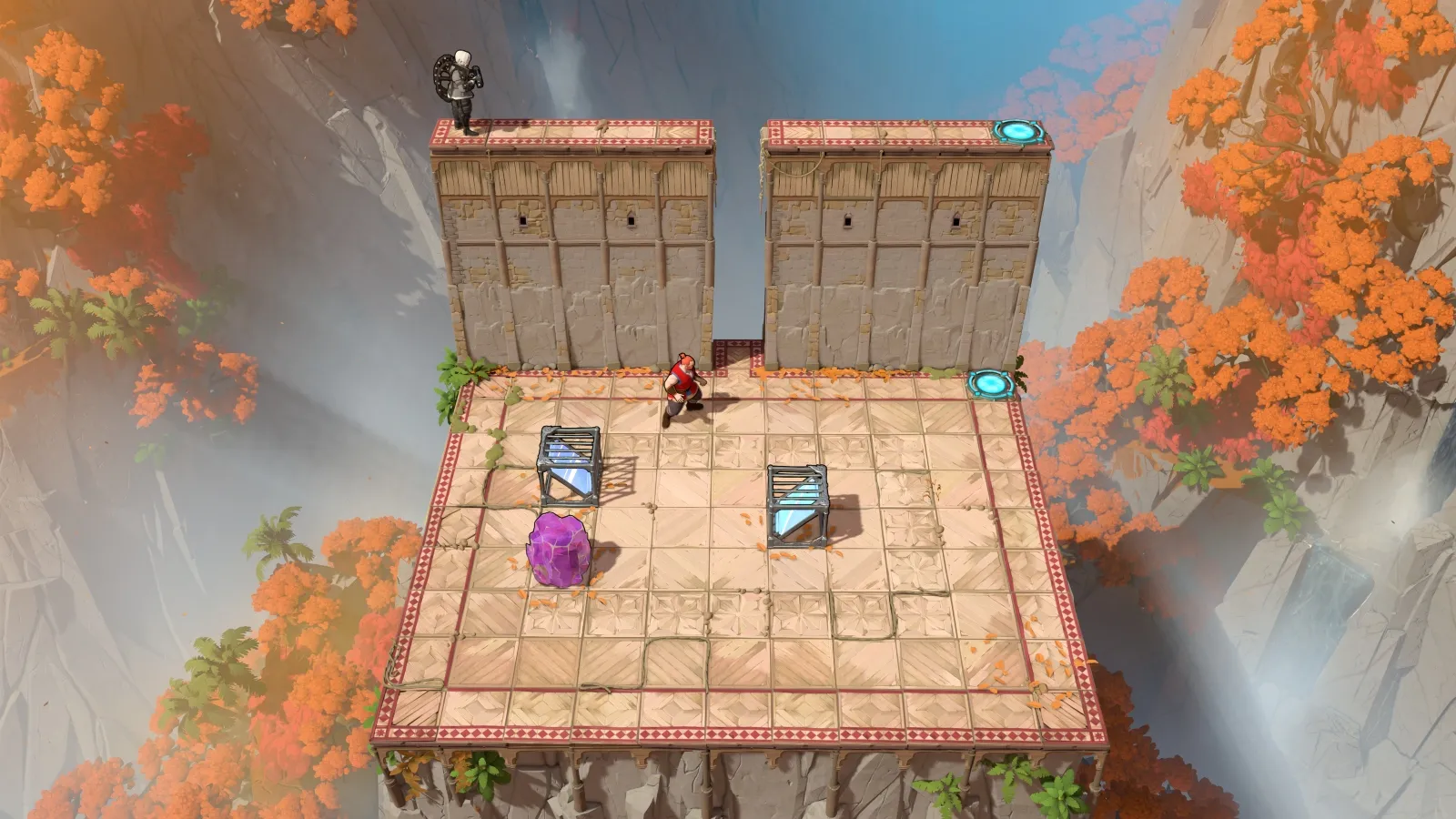
Characters occupy their home territories, which themselves are centered around a specific puzzle mechanic. The Mirror Isles stars a man with the ability to teleport through mirrors, so his gameplay centers on positioning mirrors to transport himself across obstacles; think of bouncing light beams in other games. He can even duplicate himself by entering multiple mirrors. The Promise features a young adventurer wearing an exoskeleton that allows him to dematerialize giant gemstones and rematerialize them into sockets to power multicolored laser beams. Each beam grants a different power when he walks through it, based on the color: yellow beams let him smash boulders and other objects. A red beam lets him bypass locked barriers of the same color. Green beams allow him to walk through walls. These beams can intersect with each other, which creates a beam granting multiple abilities. Another area features skipping stone exercises, as players push giant stones across water that will skip in a straight line until hitting a patch of land.
Solving the initial batch of puzzles in each territory unlocks that ability for the Queen to utilize in the overworld. For example, she can access new sections of the overworld by teleporting through mirrors upon completing enough puzzles in the Mirror Isles. “And that’s the general pattern that the overworld exploration takes, is that you visit levels, you see new mechanics or new ideas, and then the overworld navigation after that uses those ideas,” Blow tells me.
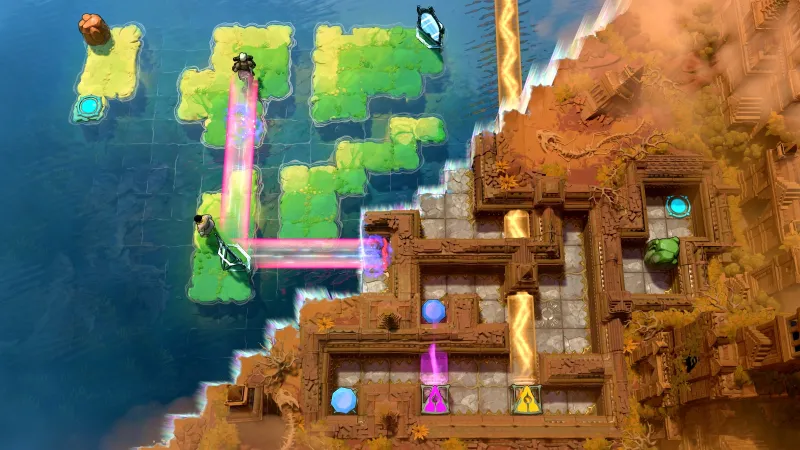
Blow skips ahead to a section where a chunk of land from the Mirror Isle, along with its mirror-hopping protagonist, suddenly borders against the brown cliffs of The Promise. The exoskeleton-wearing adventurer converses with the mirror character, proposing they work together, and Blow explains that this results in both characters combining their talents and engaging with each other’s unique puzzle mechanics so that they can solve puzzles neither could tackle alone.
Blow describes this convergence of worlds as the primary hook for Order of the Sinking Star, as players will explore a giant space of possibility created by mashing all of these disparate designs together. “Mechanically, we conceived it as kind of a super collider of game design,” says Blow. When I ask what inspired this approach, Blow explains that he began to notice that games tend to stop growing in complexity and end relatively soon after reaching their mechanical zenith.
“What that means is every game sort of ends up around the same level of complexity because you build it up, and then as soon as you get there, you're done, right?” says Blow. “So what would happen if we started with game units that are themselves already fun and interesting, and then we combine them into something way more complicated? And so that was the idea.”
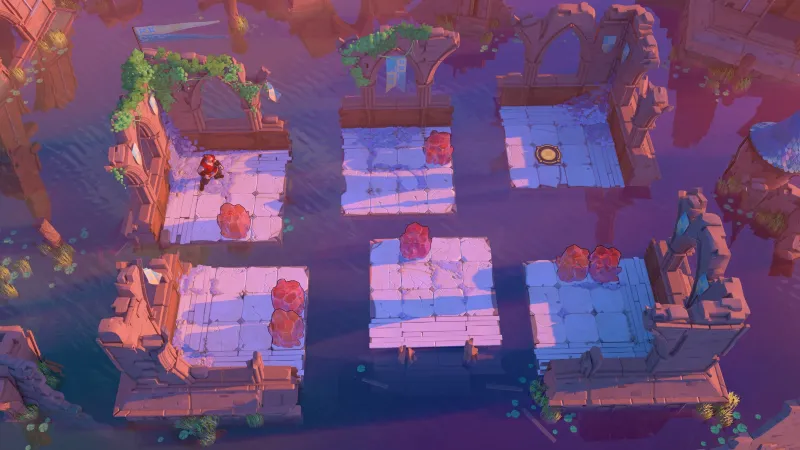
Combination puzzles are unlocked upon finding and entering gold rooms scattered across the four territories. Upon entering, a new large star can be found in specific spots. Solving smaller puzzles causes these bigger stars to illuminate a golden light, signaling completion, which in turn fills a meter tracking every completed gold star. A full meter activates a teleporter in the gold room. There are six of these teleporters across the same number of gold rooms across the game, and activating at least four of them sends players to the endgame.
Due to its size and non-linear nature, Blow says Order of the Sinking Star has the most narrative content he’s created for a game. The plot will unfold differently depending on when you tackle things, and the plot funnels into one of three endings. There’s a primary conclusion most players will witness, and two others that will require solving extra mysteries to unlock. Blow says these conclusions are all written to feel satisfying and positive tonally; he doesn’t believe in “bad” endings.
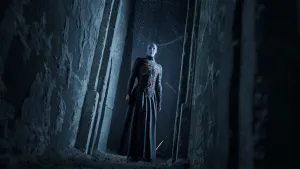
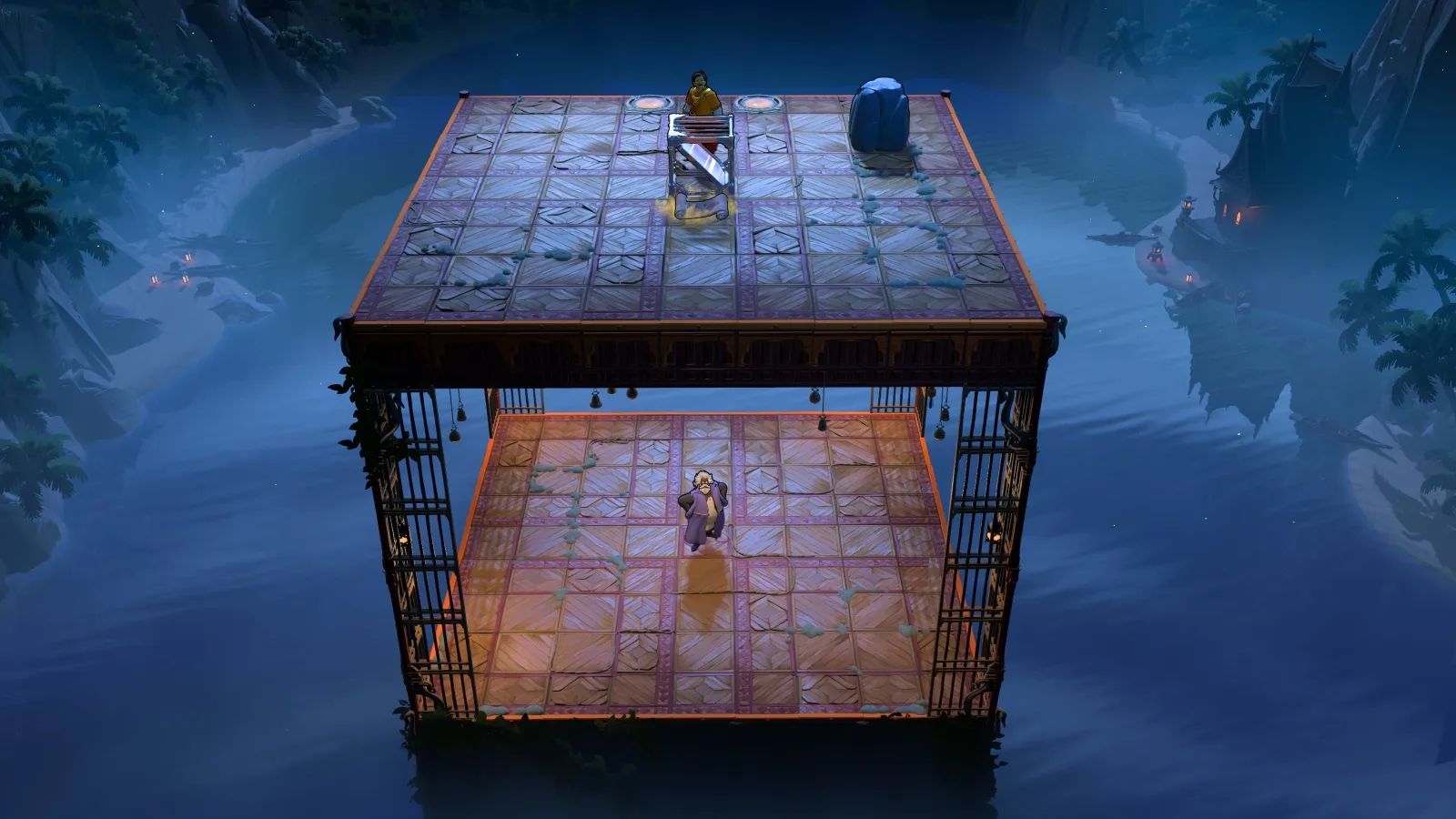
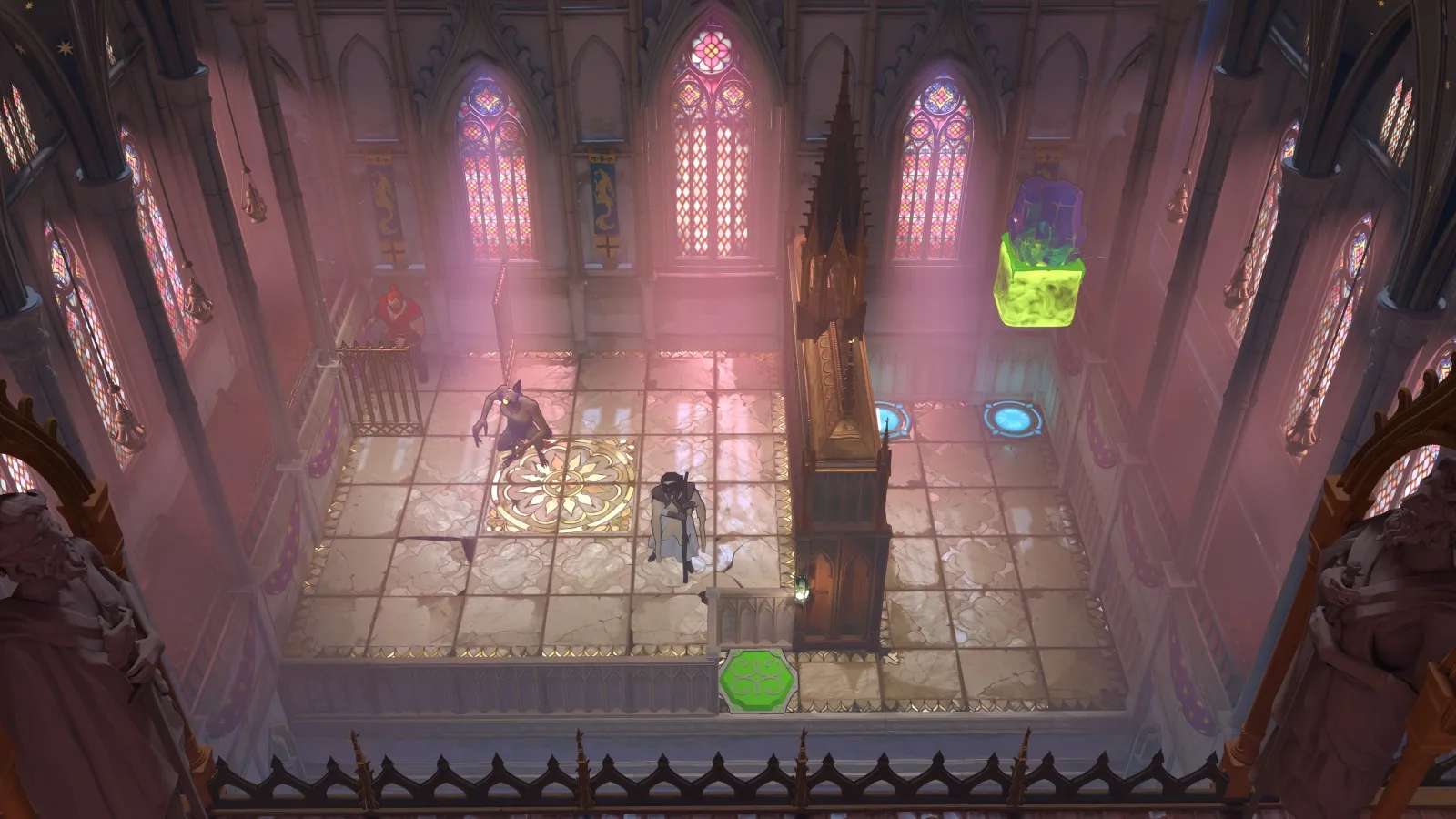
As we wrap up our session, Blow shows off some completed levels to show the variety of art styles and viewpoints. Certain later levels will shift to a 3D perspective, allowing puzzles that feature elevation and depth. I see art directions and architectural styles not present in the initial four territories. One dark area appears as moss-covered subterranean ruins, while another is within a cathedral. Order of the Sinking Star is massive, and with literally thousands of puzzles, I ask how many are mandatory versus being optional. Blow estimates that around 20 to 30 percent of the puzzles, in the early game at least, can be skipped. But he notes that as the ratio of optional puzzles grows, the game will become more difficult, with the truly complex riddles left up to the player to tackle.
Blow and his team have grappled with the question of “How big is too big?” but he points to the popularity of games like Elden Ring, which he enjoyed, as proof that there’s an audience of players who enjoy discovering and solving mysteries in an open, non-linear format. He also cites The Witness’s success in allowing players to tackle puzzles at their own pace and the freedom to explore elsewhere when a current problem becomes too tough.
“I think maybe this is one way that games are going now, especially single-player games. As a designer, you want to build something really deep. And as a player, if you're that super-engaged player, you want something really deep,” Blow says.
Order of the Sinking Star is scheduled to launch on PC next year, though a console release has not been ruled out. The sheer amount of puzzles it boasts is mind-boggling and a little intimidating, but seeing even a small sample of how these mechanics build upon one another and eventually combine has me excited. I can’t wait to test my wits and unravel the secrets of this mysterious world.
On
On
Off
Off
Products In This Article